Written in Skin: The Tattoo Artists Who Turn Family Legacies Into Living Portraits
Dana Reyes didn't want a scrapbook. She didn't want a shadow box, a framed photo, or a memory quilt stitched together by well-meaning aunts. What she wanted, six months after her mother died, was to carry her somewhere specific — somewhere she couldn't lose her.
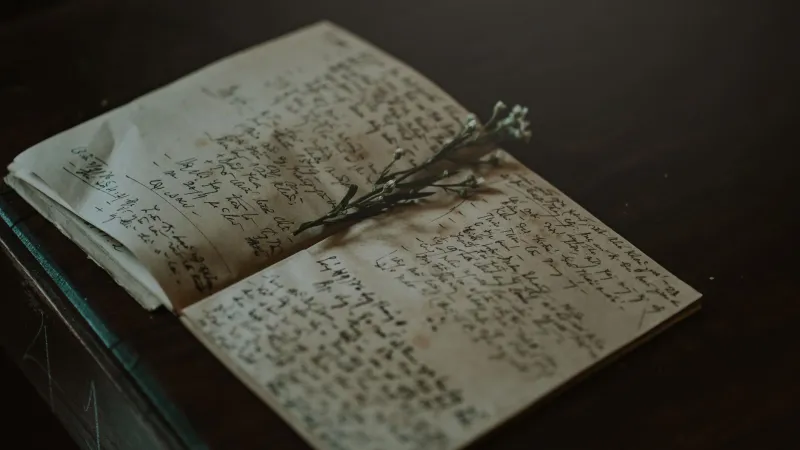
So she walked into a tattoo studio in Nashville with a folded piece of notebook paper, smoothed flat from being handled too many times. On it, in looping, uneven cursive, was her mother's tamale recipe. The whole thing — masa ratios, chile preparation, the little note at the bottom that said don't rush the steam.
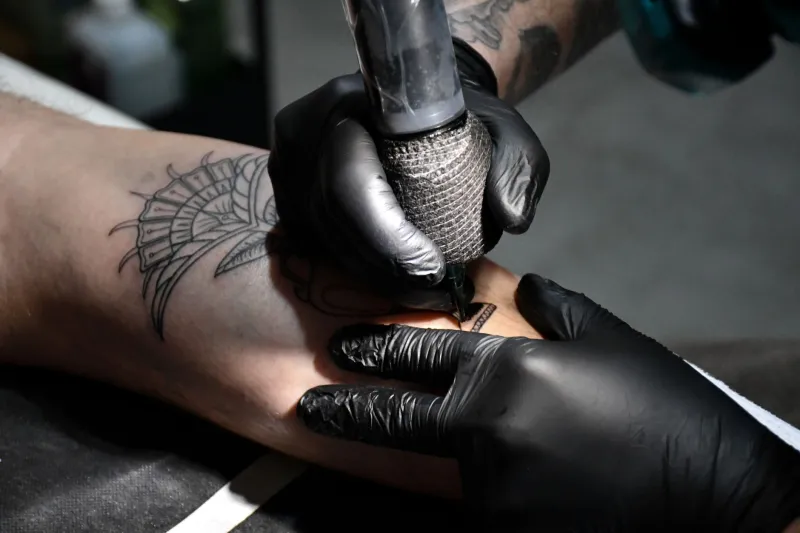
"I had it tattooed down my left forearm," Dana says. "Every word. Her handwriting, exactly as she wrote it. I can read it when I cook. I read it when I miss her. It's the most useful thing I've ever done with grief."
A Different Kind of Archive
Across the country, a loose but growing community of tattoo artists has carved out a specialty that sits somewhere between portraiture, archival work, and grief counseling. They call it different things — legacy work, memorial tattooing, heirloom ink — but the practice centers on the same impulse: taking something fragile and making it permanent, on the most personal surface available.
These aren't the flash tattoos of a Friday night impulse. They're labored-over commissions that can take months of correspondence, reference gathering, and emotional preparation. The clients arrive with shoeboxes of photographs, folded letters, birthday cards signed in shaky handwriting, recipes clipped from the margins of cookbooks. They arrive, often, with stories they've never told anyone outside their families.
Marcus Webb, a tattoo artist based in Atlanta who has spent the last eight years focusing almost exclusively on memorial work, describes his studio as feeling less like a shop and more like a listening room.
"People come in and they talk for a long time before we ever discuss what they want on their body," he says. "They tell me who this person was. What they smelled like. What they used to say when they were proud of you. I need all of that before I can put anything on skin. The tattoo has to hold the whole person, not just a face."
What Gets Carried
The range of what people choose to preserve is striking in its intimacy. Old signatures lifted from birthday cards. A grandfather's military dog tag number, rendered in the exact font stamped on the original metal. A grandmother's lipstick print, photographed, scaled, and transferred to a shoulder blade in soft rose ink. Sheet music handwritten by a father who played piano at church every Sunday for forty years.
In Portland, tattoo artist Simone Alcott has developed a technique for translating degraded photographs — the kind that have faded to near-nothing in a drawer somewhere — into fine-line portraits that capture not just likeness but texture. She works from scans, digitally restoring what she can before hand-drawing the final design.
"A lot of my clients bring me the only photo they have of someone," she says. "One photo, maybe taken in 1952, maybe water-damaged. And they want that person's face on their body forever. That responsibility is enormous. I take it seriously in a way I can't fully explain."
What Simone describes — that sense of weight — comes up again and again when you talk to artists in this space. There's a reverence to the work that distinguishes it from other tattooing, even other emotionally loaded tattooing. You're not just making something beautiful. You're being trusted with someone's entire understanding of where they come from.
The Ritual of the Chair
The actual session — the hours under the needle — takes on a ceremonial quality that clients rarely anticipate.
Jordan Tate, a 34-year-old high school teacher from Columbus, Ohio, had his late father's handwriting tattooed across his collarbone. The text was a single line from a birthday card: You make me proud every single day. He'd kept the card in his wallet for eleven years.
"I cried for probably the first hour," Jordan says, laughing a little at the memory. "Not from pain. Just from — I don't know. From it being real. From knowing that line was going to be on me forever. The artist didn't say much. She just kept working. But she handed me tissues without making it weird, which meant everything."
That emotional attunement is something the best practitioners in this niche seem to develop almost instinctively. Marcus Webb keeps a small shelf of framed thank-you notes in his studio — not for display, but because he can't bring himself to put them away. "People write to me months later," he says. "They say things like, 'I was at a family dinner and my aunt saw it and started crying because it looked exactly like him.' That's the work."
Skin Over Scrapbook
There's a philosophical dimension to choosing the body as an archive that people in this community think about a lot. A scrapbook can burn. A hard drive fails. A box of letters gets lost in a move, left behind in a storage unit, forgotten in the chaos of settling an estate. The body, for however long it lasts, goes with you.
"I think people are realizing that the physical objects we thought would last forever — they don't, actually," says Simone Alcott. "Photos fade. Paper crumbles. But this? This is as permanent as anything gets in a human life. And it's not sitting in a drawer. It's alive. It moves with you."
There's something else, too, something harder to articulate. When Dana Reyes rolls up her sleeve to read her mother's tamale recipe while she cooks, she's not just consulting a record. She's in a conversation. The skin remembers the needle. The recipe lives in the same place she feels things.
"My mom is in the room when I cook," she says simply. "That's the only way I know how to describe it."
The Artists Who Listen
What this growing niche has quietly produced is a cohort of tattoo artists who are, in a real sense, community historians. They know the stories of dozens of families. They've held the weight of other people's grief and transformed it, over hours and sessions, into something a person can look at every day and feel less alone.
Marcus Webb doesn't advertise. His clients find him through word of mouth, through grief support groups, through a friend of a friend who came to him after a loss and left with something they couldn't stop showing people.
"I never planned to do this kind of work," he admits. "But once you do it — once you sit with someone through that process and watch them look at their arm afterward — you can't really go back to doing anything else."
Some stories are meant to be told out loud, passed down at dinner tables and holiday gatherings. And some stories, apparently, are meant to be worn — scrolled across a forearm, pressed into a shoulder, carried quietly into every room a person enters for the rest of their life.