Grooves That Remember: The People Pressing Family Voices Onto Vinyl Forever
The last voicemail Dana Kowalski ever received from her mother was forty-three seconds long. Her mom called from a parking lot in Cincinnati, rambling cheerfully about a sale at the garden center and asking whether Dana wanted tomato starts this spring. Nothing urgent. Nothing profound. The kind of call you'd return in an hour and forget by dinner.
Then her mother died, unexpectedly, six weeks later.
For two years, Dana kept that voicemail alive by sheer force of habit — backing it up to three different cloud services, emailing the audio file to herself, refusing to upgrade her phone without triple-checking the transfer. "I was terrified of a software update," she says. "Terrified of accidentally tapping delete. It felt like I was holding something made of smoke."
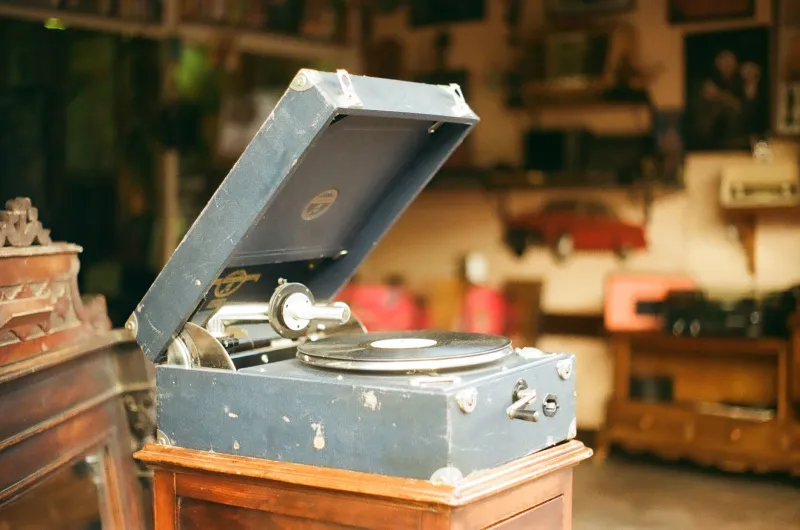
Then she found a small-batch vinyl pressing service out of Portland, Oregon, and she did something she hadn't expected: she cried the moment the record arrived in the mail. "I put it on the turntable," Dana says, "and suddenly she was just — there. In the room. Coming through the speakers. And I thought, okay. She's safe now."
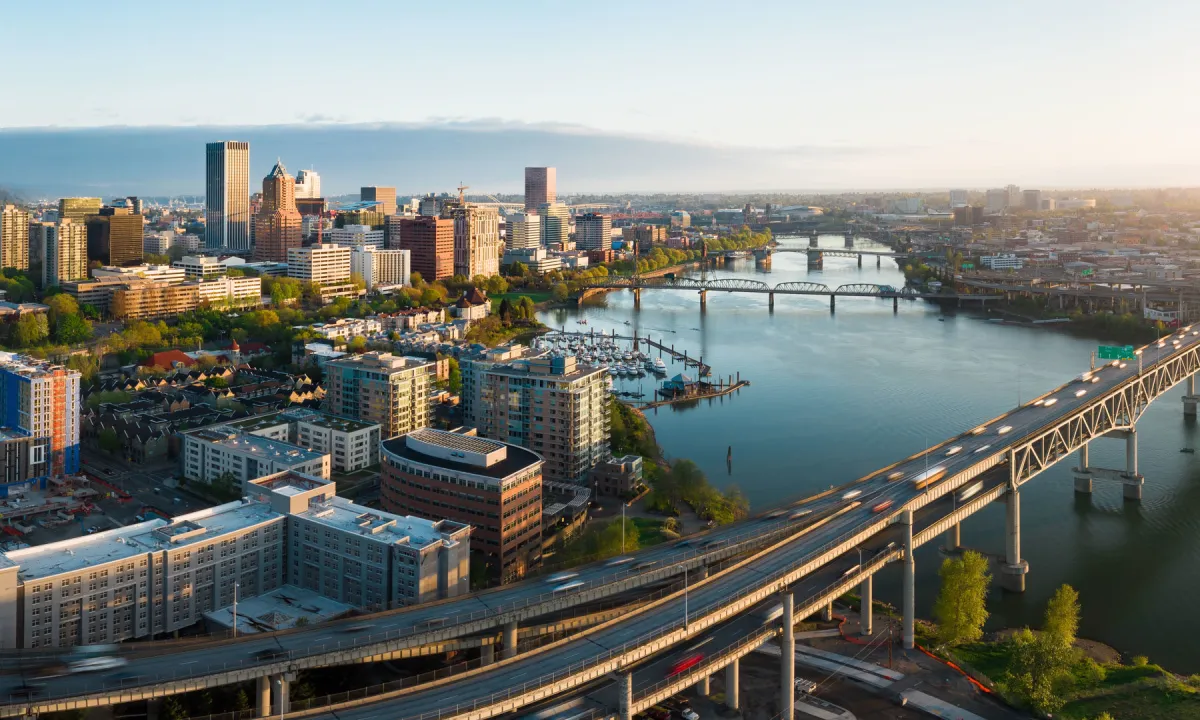 Photo: Portland, Oregon, via wanderingwheatleys.com
The New Archivists
Dana isn't alone in this. Across the United States, a quiet and deeply personal movement is taking shape in living rooms, home studios, and late-night kitchen tables. People are pressing their most intimate audio memories — voicemails, cassette recordings of grandparents telling stories, childhood home videos with the picture stripped away, rambling audio diaries, even the ambient sounds of a house that no longer exists — onto actual vinyl records. Small runs. Sometimes just one copy. Sometimes five, split among siblings.
Services like Hand Drawn Pressing in Nashville, Furnace Record Pressing in Virginia, and a handful of smaller boutique operations have begun fielding an uptick in requests that have nothing to do with music in any traditional sense. These aren't bands releasing debut EPs. They're adult children archiving a parent's laugh. They're grandchildren turning a grandfather's wartime letters into spoken-word recordings they can hold in their hands.
The appeal, for most of them, is almost paradoxical. We live in an era of theoretically perfect digital permanence. Files don't degrade. Cloud storage doesn't rust. And yet the people drawn to this process describe digital archives as feeling fundamentally unreal — too easy to lose, too easy to forget, too dependent on platforms and passwords and companies that might not exist in thirty years.
"A vinyl record," says Marcus Webb, a hobbyist musician in Asheville, North Carolina who pressed a record of his late father's jazz piano improvisations recorded on a battered cassette deck in the 1980s, "doesn't need a subscription to exist."
Something You Can Actually Hold
There's a tactile dimension to this that people keep circling back to. The weight of a record sleeve. The small ritual of lowering a needle. The act of flipping to Side B.
For Renata Espinoza, a high school teacher in San Antonio, the vinyl pressing of her abuela's corridos — folk songs recorded on a handheld digital recorder during a family reunion in 2011 — became something her whole extended family now treats like a family heirloom. "It sits on a shelf," she says. "People pick it up when they visit. They read the liner notes I wrote. It has presence in a way that a shared Google Drive folder just never could."
 Photo: San Antonio, via static.wikitide.net
Renata spent weeks writing those liner notes. Translating lyrics. Annotating the recordings with dates and names and the particular afternoon light she remembers from that day. The record became, almost accidentally, a piece of storytelling in its own right.
That's a pattern worth noticing. Many of the people undertaking these projects describe the process of making the record as being just as meaningful as the finished object. They're forced to listen, really listen, to recordings they may have been too grief-stricken or too busy to sit with before. They're forced to make choices — what goes on Side A, what gets left out, how long the silences should run. They become editors of their own family histories.
The Technical Side of Feeling
It's worth noting that this isn't cheap or easy. A single custom-pressed vinyl record, depending on the service and the run size, can cost anywhere from $50 to several hundred dollars. Audio quality matters enormously — a muffled voicemail recorded in a windy parking lot will sound like exactly that when amplified through a stylus. Many people work with audio engineers to clean up recordings before pressing, adding another layer of cost and time.
But that friction, counterintuitively, seems to be part of the point.
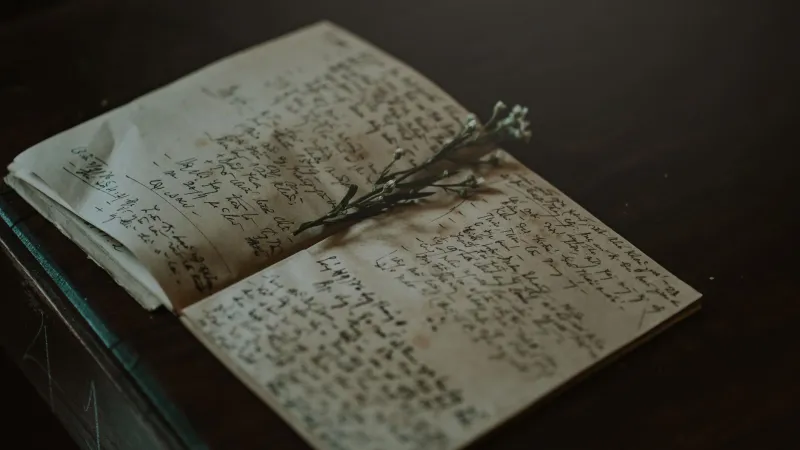
"If it were easy, I think it would feel less real," says Jordan Tate, a graphic designer in Minneapolis who pressed a record of his grandmother reading aloud from her own handwritten journals — journals she kept for sixty years and that Jordan digitized over a summer-long project before she passed. "The effort is part of how you honor it."
Jordan designed the sleeve himself: a photograph of his grandmother's handwriting, blown up large enough to read, wrapping around a matte black jacket. He pressed twelve copies. Mailed them to cousins he hadn't spoken to in years. Three of them called him, crying, within a week.
Why Now
It's tempting to frame this as simple nostalgia — another chapter in the ongoing vinyl revival that's been reshaping the music industry for a decade. But that reading feels too shallow. The people doing this aren't necessarily audiophiles. Many of them don't own turntables and had to buy one specifically for this project. They're not chasing warmth of sound or analog authenticity in any technical sense.
What they seem to be chasing is permanence with weight. Memory with a body.
There's something culturally telling about a generation that grew up watching digital formats collapse — Myspace vanishing, iTunes libraries evaporating, photo services shutting down and taking albums with them — turning to one of the oldest consumer audio formats still in existence as their chosen vessel for the irreplaceable. Vinyl isn't forever, of course. Records warp. Needles wear. But they're tangible in a way that a file on a server isn't. They exist in physical space. They take up room on a shelf. They require you to be present with them.
And presence, it turns out, is the whole point.
The Record Is the Story
Dana Kowalski plays her mother's voicemail record maybe twice a year. Not more. She says playing it too often would dilute something she can't quite name. But knowing it's there — solid, physical, sitting in a sleeve she designed with a photograph of her mother's garden — has changed her relationship to the grief in ways she's still working out.
"I used to wake up at 3 a.m. panicking that I'd lost it somehow," she says. "I don't do that anymore. It's just there. It's going to be there when I'm gone, and maybe someone else will put it on and hear her voice and wonder who she was."
She pauses. "That feels right. That feels like enough."
Some stories don't need an audience of thousands. Some of them just need a groove, a needle, and the right person in the room.