Waiting for the Mail: The Strangers Who Became Each Other's Most Trusted Friends, One Letter at a Time
Waiting for the Mail: The Strangers Who Became Each Other's Most Trusted Friends, One Letter at a Time
There's a particular kind of anticipation that lives in a mailbox. Not the dull, resigned sort you feel when you're expecting a bill or a package tracking notice — something else entirely. Something that makes you walk a little faster down the driveway. Deborah Maines, a 44-year-old librarian in Flagstaff, Arizona, knows that feeling well. She's been writing letters to a woman named Greta in rural Vermont for going on eleven years now, and she says she still gets a small flutter in her chest whenever she spots Greta's handwriting on an envelope.
"There's no preview," Deborah says, laughing a little. "You can't just glance at the first line and decide whether you're in the mood. You have to commit. You sit down, you open it, and you read."
That commitment — deliberate, unhurried, irreversible — is exactly what draws people to pen palling in an era when every other form of communication is designed to be frictionless. Across the country, a loose, largely self-organizing community of adults has quietly pushed back against the scroll-and-swipe rhythm of modern life, choosing instead to correspond the old way: pen on paper, folded into an envelope, sent through the mail, and answered when the time feels right.
How People Find Each Other
The networks that connect pen pals today are a little ironic — they mostly exist online. Forums on Reddit, communities on Instagram, dedicated matchmaking websites like Slowly and PenPal World have become the unlikely infrastructure behind a decidedly analog practice. People post brief introductions — their age, their city, what they like to write about — and wait to see who reaches out.
Marcus Tillman, 31, a graphic designer in Atlanta, found his pen pal, a retired schoolteacher named Lou in upstate New York, through a Reddit thread back in 2019. "I was going through a rough patch," he says. "I didn't want to talk to anyone I actually knew. I wanted someone outside my life entirely." He wrote a first letter, mailed it, and figured he'd probably never hear back. Lou responded three weeks later with four pages — front and back — written in a looping cursive that Marcus had to read slowly to decode. "I loved that," he says. "It slowed me down."
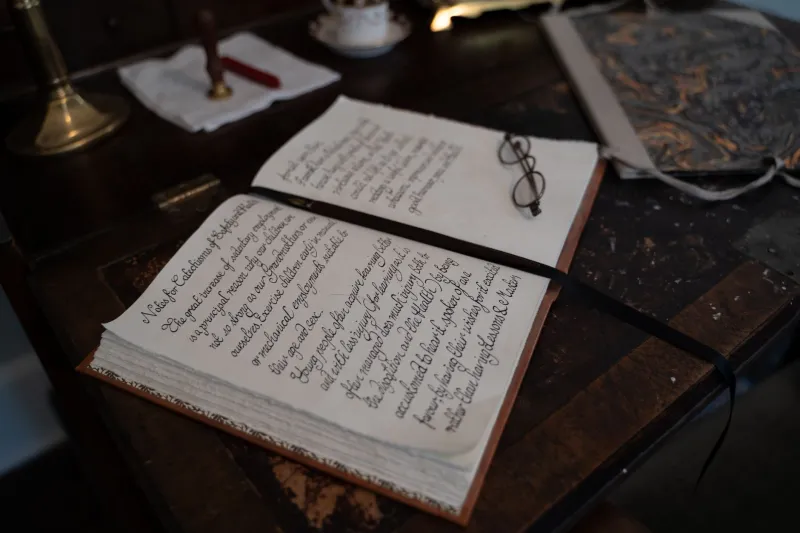
That slowing down is a recurring theme. People describe the act of reading a handwritten letter as qualitatively different from reading a text or even an email — something about the physical specificity of ink, the evidence of someone's hand, the occasional cross-out or margin note that shows you the thinking behind the words.
What Gets Written
Ask pen pals what they actually write about and the answers are surprisingly wide-ranging. Some correspondences stay light — books, recipes, small observations about daily life. Others go deep in ways that feel almost confessional.
Sophie Reyes, 27, a nursing student in Houston, has been writing to a woman named Janet in Portland, Oregon, for three years. Their letters have covered grief, career doubt, family estrangement, and, memorably, a shared obsession with tracking down the best green chile in their respective states. "I've told Janet things I haven't told my closest friends," Sophie says. "I think the distance makes it easier. She's not going to run into my mom at the grocery store."
That geographic remove, paradoxically, seems to create emotional closeness. There's a confessional quality to writing into the relative unknown — your words traveling hundreds of miles to someone who has no stake in your immediate social world, no history with the people you're describing, no ability to let something slip at the wrong moment. Letters become a kind of pressure valve.
For others, the appeal is simpler: letters are a space where life gets recorded. Marcus keeps every letter Lou has ever sent him, rubber-banded by year, in a shoebox under his bed. "They're a document," he says. "Five years from now, I'll be able to go back and see exactly what my life looked like in 2022. You can't do that with a text thread you deleted."
The Ritual of the Wait
One thing nearly every pen pal mentions, unprompted, is the waiting. In a culture that treats response latency as a kind of social slight — where leaving someone on read for too long carries its own social weight — the deliberate pause built into letter-writing feels almost radical.
A letter from Flagstaff to Burlington takes roughly three to five days in transit. Then Greta has to find the time and the right mood to write back. Then the return journey. Deborah might wait three to six weeks between letters. "People think that sounds like a long time," she says. "But what happens in that space is that you sit with what they said. You think about it. You write your response in your head before you ever pick up a pen. By the time you actually write it, you have something real to say."
That enforced patience has a way of filtering out the noise. The minor frustrations and fleeting observations that fill most digital exchanges — the memes, the quick reactions, the half-formed complaints — don't make the cut when you're committing them to paper and postage. What gets written tends to be what actually matters.
Something That Lasts
There's a small but growing movement within pen pal communities around what people call "legacy letters" — correspondences explicitly intended to be kept, shared, maybe even passed down. Some writers include photographs, pressed flowers, newspaper clippings, hand-drawn maps of their neighborhoods. The letters become artifacts almost as much as messages.
Lou, Marcus's pen pal, told him early on that she intended to leave her collection of their letters to her granddaughter someday. "That hit me hard," Marcus says. "I started writing differently after that. Not performing, exactly — but being more careful. More honest. Knowing that someone else might read it one day."
Deborah has started doing something similar. She photographs each letter Greta sends before she writes back, keeping a digital archive alongside the physical stack in her hall closet. "Eleven years is a lot of letters," she says. "That's a lot of life."
It is, when you think about it. Eleven years of Tuesdays and Thursdays, of sitting down at a kitchen table with a pen, of choosing your words deliberately and then trusting them to the mail. In a world that keeps finding faster and faster ways to connect people, there's something quietly stubborn about that choice. Something that insists connection isn't really about speed at all.
The mailbox still holds its old magic. You just have to be willing to wait for it.