Something About a Blank Page: The Guest Books That Hold America's Quietest Confessions
Something About a Blank Page: The Guest Books That Hold America's Quietest Confessions
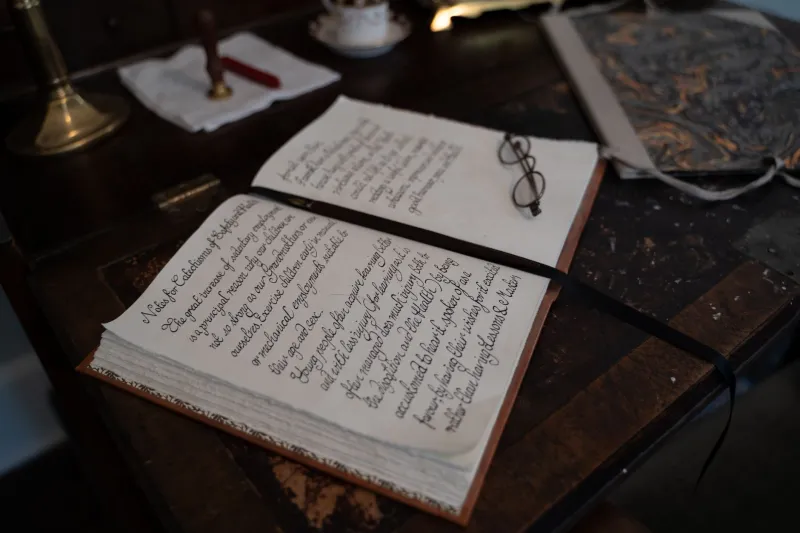
The book at the Ridgeline Motor Inn in Salida, Colorado, is held together with a rubber band and a little faith. Its spine gave out sometime around 2011, according to owner Darlene Pacheco, who has run the place for going on thirty years. She could replace it. She could digitize it. She could set up a tablet at the front desk the way the franchise hotels do, prompt guests for a star rating, send a follow-up email. She hasn't. She won't.
"People write things in that book," she says, setting a mug of coffee on the counter without being asked, "that I don't think they've said out loud to anyone."
She's not exaggerating. Flip through the Ridgeline's pages and you'll find a man who wrote, in careful block letters, that he'd just left his marriage and wasn't sure he'd made the right call. Two pages later, a couple announced they were expecting twins. Somewhere in the middle, someone simply drew a small mountain and wrote beneath it: I made it. No context. No name. Just three words and a sketch, permanent as anything.
The Analog Confessional
Across the country, in pockets that the algorithm hasn't fully reached, a small tradition is holding on. Physical guest books — the actual paper kind, with actual pens attached on actual strings — are still sitting on counters at old roadside motels, lakeside lodges, and breakfast spots that have been feeding the same county for fifty years. They survive not because the owners are technophobes or sentimentalists, though some are both. They survive because guests keep filling them.
What people write in these books is something else entirely compared to what they post online. No star rating. No complaint about the Wi-Fi. Instead: a paragraph about a father who died last spring, and how this was the cabin where they used to fish together. A teenager's handwriting describing their first solo road trip. A woman who left her phone number with a note that said she'd been sitting at the counter for three hours and the pie and the quiet had genuinely saved her afternoon.
There's a psychology to it that feels almost obvious once you think about it. The guest book is anonymous enough to feel safe — most people don't use their full names — but permanent enough to feel meaningful. It's not a tweet that disappears into the feed. It's not a text that can be read and ignored. It's ink on paper, in a place you'll probably never return to, read by strangers you'll never meet. That combination, somehow, loosens something.
What the Owners Know
Marvin and Gloria Tate have run the Whispering Pines Lodge outside of Brevard, North Carolina, since 1989. Their guest book is actually a series of books — seventeen volumes, stored in a cedar chest in the back office, each one dated on the spine in black marker. Gloria started numbering them after a guest asked if they could read the old entries and she realized she'd been keeping them without ever thinking about why.
"We read them sometimes, on slow nights," Gloria says. "It's like reading a novel where the characters keep changing but the setting stays the same. The same view out the window, the same creak in the floorboards. Different people, different years, different heartbreaks."
Volume four, from the mid-nineties, includes a message from a couple celebrating their fiftieth anniversary. Volume twelve has an entry from what appears to be their grandchildren, visiting decades later, who found the original entry in a family photo album and made the trip specifically to add their own line to the story. Gloria didn't know about that until she read it herself.
"I cried," she says simply. "What else are you going to do?"
At the Copper Kettle Diner in Taos, New Mexico, owner Pete Salazar keeps his guest book behind the pie case, which means you have to ask for it. He started doing that after a bad stretch when tourists were signing it ironically, leaving fake names and joke entries. Moving it behind the counter changed everything. Now you have to want it. You have to ask. And the people who ask, Pete says, are serious.
"You can tell," he says. "They sit with it. They think about what they're going to write. Sometimes they ask for another minute."
What Travelers Leave Behind
Ask people who've signed these books why they did it, and the answers tend to circle the same few ideas. Something about being between places. Something about the specific freedom of a room or a counter where no one knows you and no one's expecting anything from you.
Jamie Okafor, a nurse from Atlanta who stopped at a small inn in the Smoky Mountains during a solo trip last fall, says she wrote more in that guest book than she'd journaled in years. "I wrote about my mom being sick," she says. "I don't know why. I hadn't even said it that plainly to my friends. But there was this book and this pen and I was alone and it just came out."
She didn't sign her full name. She wrote her first name and the city. Enough to feel real, not enough to feel exposed.
That balance — real but not exposed, permanent but not public — seems to be exactly what these books offer. A digital review is performed. It's written knowing it will be read, rated, replied to. The guest book is something closer to a letter to no one in particular. Or maybe a letter to everyone who comes after.
Why It's Worth Preserving
Darlene at the Ridgeline has been approached twice about digitizing her guest books. A local historical society offered to scan them. A tech-minded nephew suggested an iPad app that could archive entries with timestamps and GPS data. She's said no both times, politely.
"The point isn't to organize it," she says. "The point is that it's a little messy. The point is that someone's handwriting is different from someone else's. The point is that you can see where someone pressed too hard because they were feeling something."
She's right, and it's worth sitting with that for a second. There's information in a handwritten page that a database can't hold. The shaky cursive of someone who was crying when they wrote it. The careful printing of someone who wanted to be understood. The drawing someone made because words weren't enough.
These books are, in their quiet way, one of the most honest records of American life that exists. Not curated, not filtered, not optimized for engagement. Just people, passing through, leaving a little of themselves on a page in a place they'll probably remember longer than they expected.
Volume seventeen at Whispering Pines is about halfway full. Gloria says she's not in any rush to start volume eighteen.
"When it's full," she says, "it's full. That's how it works."
Some things don't need to move faster than that.