Sit Down and Listen: The Porch Storytellers Bringing America's Oral Tradition Back to Life
Sit Down and Listen: The Porch Storytellers Bringing America's Oral Tradition Back to Life
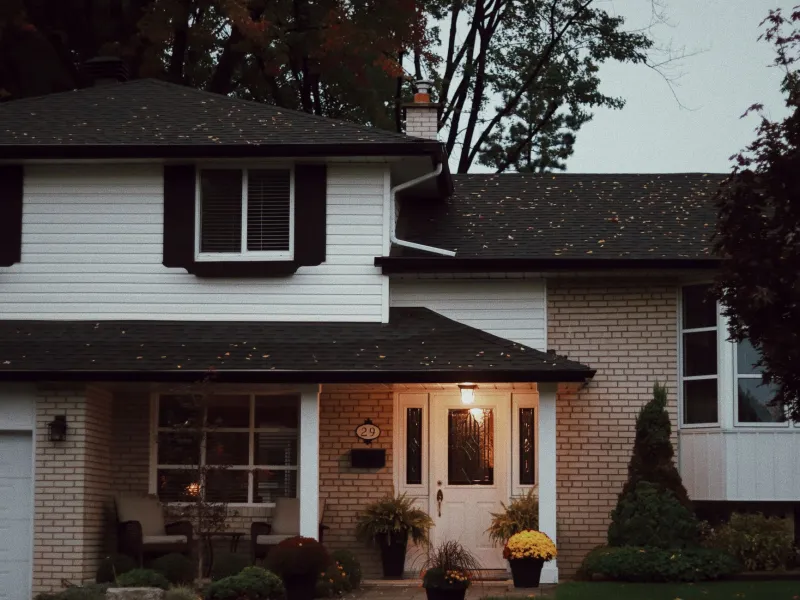
There's a woman in the Tremé neighborhood of New Orleans who has been telling stories from her front porch every Thursday evening for going on eleven years. Her name is Celestine Arceneaux, and she doesn't advertise. No flyer, no Instagram post, no event page. The word just gets out the way it always has — mouth to ear, neighbor to neighbor — and by the time the sun drops behind the live oaks on her block, there are usually eight or twelve or sometimes twenty people sitting on her steps, her lawn, her neighbor's borrowed folding chairs, listening.
She tells stories about her grandmother surviving a hurricane before hurricanes had names. She tells stories about the men who used to play brass instruments on this very block before the city changed around them. Sometimes she tells stories she admits she's only half sure are true. "That's the thing about a spoken story," she says, leaning forward in her rocker. "It's alive. It breathes. A lie told with love can carry more truth than a fact told cold."
Celestine is part of something that doesn't have an official name, a nonprofit structure, or a grant attached to it. Across American cities — in Detroit's North End, in West Philadelphia, in East Austin, in South Chicago — a loose and largely unconnected community of people are doing more or less the same thing. They're dragging chairs outside. They're opening their mouths. And they're asking the people around them to put down their phones and simply listen.
What Gets Lost in the Silence
Oral tradition is one of those phrases that tends to get romanticized into abstraction. But spend a Thursday evening on Celestine's porch and it feels like something far more immediate — almost urgent.
Cultural anthropologists have written at length about what happens when communities lose their spoken storytelling practices. Memory becomes externalized. History gets flattened into searchable text. The emotional texture of a story — the pause before the hard part, the way a voice catches, the laughter that breaks a room open — disappears entirely. You can read about a flood. You cannot read the sound of someone who survived one.
In Detroit, a retired schoolteacher named Harold Okafor started hosting what he calls "front step sessions" after his wife passed away three years ago. He'd found himself sitting outside in the evenings because the house felt too quiet, and neighbors began stopping to check on him, and then stopping longer, and then not leaving at all. "I didn't plan it," he says simply. "Grief just pushed me outside, and community kind of filled the space."
His sessions have grown into something genuinely remarkable. Last summer, a group of oral history students from Wayne State University showed up with recording equipment. Harold let them come, but asked them to put the gear away for the first hour. "Machines change the room," he explains. "People talk different when they think they're being preserved."
The Younger Crowd Showing Up to Listen
Perhaps the most unexpected development in this informal movement is who's actually showing up.
It isn't just retirees or longtime residents. In neighborhood after neighborhood, people in their twenties and thirties — many of them digital natives who have spent the better part of their adult lives consuming content through earbuds — are pulling up chairs and going quiet. Something about the unmediated directness of a spoken story in real space appears to be hitting different for a generation that has been saturated by curated content since childhood.
In West Philadelphia, a 26-year-old graphic designer named Priya Menon started attending the porch sessions of her elderly neighbor almost by accident. "I was walking by and I just heard this voice," she says. "Not a podcast voice, not a performance voice. Just a person talking. I stood on the sidewalk for like ten minutes before I realized I wasn't going anywhere."
She's been coming back every other week for two years. She's brought friends. Those friends have brought friends. The neighbor whose porch it is — a 79-year-old Guyanese-American woman named Gloria — now has a standing crowd that sometimes includes people who drove in from other parts of the city.
"I think young people are starving for something that doesn't have an agenda," Priya says. "No brand deal, no growth strategy. Just somebody who has actually lived something, telling you about it."
The Rules of the Porch
What's striking about these gatherings is how consistent the informal protocols tend to be, even across cities where the participants have no knowledge of each other.
Phones stay in pockets. Interruptions are generally welcome — a good porch story is a conversation, not a lecture. Hosts rarely use notes. Listeners are often invited to respond with their own stories, which means an evening can spiral beautifully off-script in ways that no curated storytelling event ever quite manages.
In East Austin, a poet and community organizer named Marcus Treviño has been hosting what he calls "open porch" nights since 2019. He started as a way to process the rapid gentrification reshaping his neighborhood — a way of insisting, through spoken word and personal testimony, that a community's history doesn't simply evaporate when the buildings change hands.
"The porch is political," he says, without a trace of self-consciousness. "When you sit outside and you speak your story in public space, you're saying: I was here. This happened. You don't get to erase it."
His gatherings tend to be louder and more charged than Celestine's or Harold's — there's more laughter, more argument, more of the specific electricity that comes from stories told in the place they actually happened. But the underlying impulse is identical: the belief that a story spoken aloud between human beings does something that a story consumed alone on a screen simply cannot replicate.
Something Worth Scrolling Toward
There's an irony in writing about oral tradition — the moment you put it on a page, you've already lost part of what makes it work. The best thing this piece can do is point you toward a door and suggest you knock.
Find out if your neighborhood has someone like Celestine, or Harold, or Gloria. Ask your oldest neighbor what they remember. Pull a chair onto your own front step on a warm evening and see who stops.
The stories are already there. They've been there the whole time, waiting for someone to sit still long enough to hear them.
Celestine puts it plainest. "People think they need a stage, a microphone, an audience," she says, watching her block settle into the blue hour before dark. "All you actually need is a porch and somebody willing to listen. The rest takes care of itself."