Sky-Sized Screens and Nowhere Else to Be: The Drive-Ins That Became America's Backyard
Sky-Sized Screens and Nowhere Else to Be: The Drive-Ins That Became America's Backyard
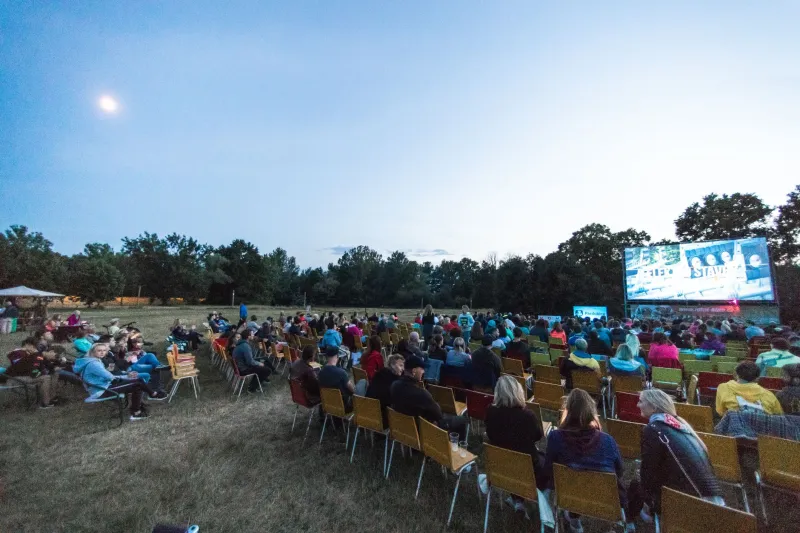
The gravel crunches under your tires before you even see the screen. That sound — familiar, unhurried — is the first signal that you've arrived somewhere different. You pull into a row, kill the engine, and for a moment you just sit there, watching other headlights do the same thing. Kids spill out of minivans. A couple drapes a blanket over a truck bed. Someone's already got a bag of popcorn, the smell of it drifting through an open window like a small announcement.
This is the Starlite Drive-In in Wichita Falls, Texas, on a Friday night in late summer. The screen — enormous, white, slightly warped at one corner — hasn't started glowing yet. The sky still holds enough pink to compete with it. Nobody seems to mind the wait.
"People come early on purpose," says Tammy Reese, who has managed the Starlite with her husband Dale for going on eighteen years. "They don't want to miss the part before the movie."
That part — the parking, the settling in, the slow communal exhale — turns out to be half the point.
What the Numbers Don't Tell You
At their peak in the late 1950s, there were more than 4,000 drive-in theaters operating in the United States. Today, depending on who's counting and how loosely you define "operating," somewhere between 250 and 330 remain. That sounds like a story about decline, and in a technical sense, it is. But spend a few weekends at the ones still running and the narrative starts to complicate itself.
Drive-ins didn't survive because they're nostalgic novelties. They survived because they do something that a multiplex genuinely cannot: they let you watch a movie the way you'd watch a bonfire. Communally. Outdoors. With your whole body aware of the weather and the night air and the fact that other people are doing exactly the same thing a few feet away.
In Aurora, Colorado, the 88 Drive-In — one of the oldest continuously operating drive-ins in the country — hosts double features every weekend from spring through fall. On a good Saturday night, the lot fills to around 500 cars. Manager Phil Cortez estimates that a third of the people who show up have never been to a drive-in before.
"They come in nervous, like they're doing something they're not supposed to," he says, laughing. "Then the second movie starts and they don't want to leave."
The Regulars
Every surviving drive-in has its version of the regulars — the families who've been coming since the kids were in car seats, the older couples who can tell you exactly which films played on which summer nights decades ago, the twenty-somethings who stumbled onto the experience and got quietly hooked.
At the Becky Drive-In in Walnutport, Pennsylvania, there's a woman named Carol who has been coming every Friday since 1987. She brings her own lawn chair and parks it between her car door and the speaker post. Her kids came with her until they grew up and moved away. Now her grandkids come instead. She doesn't track the titles of the movies she's seen. What she tracks is the seasons — which films played during the summer she got married, which ones were showing when her mother died, which double feature was on the night it rained so hard the screen disappeared.
"It's not about the movies," she says, but not dismissively. "The movies are the reason you go. But the reason you keep going is something else."
She pauses, watching the lot fill up around her.
"It's the size of the thing. You can't look at a screen that big and feel like your problems are bigger."
Running the Projector
Behind the screen — sometimes literally, in a small concrete booth that smells of old equipment and WD-40 — are the people who make all of it happen. Many drive-in owners operate on margins so thin they'd make a restaurant owner wince. They fight zoning boards, weather damage, and the relentless pressure of land that developers want for something more profitable.
Dale Reese at the Starlite converted to digital projection in 2013, which saved him money but cost him something he still hasn't fully named. "There was a ritual to the film," he says. "You touched it. You could hold it up to the light and see the frames."
He keeps a reel of old 35mm film in the booth anyway. Doesn't run it. Just keeps it.
The economics of survival vary from place to place. Some drive-ins run concession stands that function as small restaurants. Some rent out the lot for flea markets on weekend mornings, then transform it into a theater by nightfall. A few have leaned into the event model — themed nights, holiday screenings, local band performances before the first feature.
What nearly all of them share is an owner who is, on some level, doing it for reasons that don't fully add up financially.
"My accountant thinks I'm crazy," says Phil Cortez at the 88. "He's probably right. But you should see this place on a July night when it's packed."
Screens the Size of the Sky
There's a specific quality to watching a movie outdoors that's hard to describe without sounding slightly mystical about it. The screen isn't contained by walls. The edges of the image blur into actual sky. When a film is set at night, the darkness in the frame and the darkness around you become the same darkness. When it's set in daylight and you're watching in daylight — during a rare twilight screening — the whole thing shimmers with a strange double reality.
And then there's the audio. Most drive-ins broadcast sound over a low-frequency FM station that you tune into on your car radio. There's a slight variation from car to car, a barely perceptible delay that, if you crack your window, you can hear rippling across the lot like an echo. It sounds, depending on your mood, either like a malfunction or like music.
First-time visitors often mention the same thing: how quickly they stop thinking about their phones. Not because anyone asked them to, but because the screen is simply too large to compete with a four-inch rectangle in your hand. The scale of the thing reorients you. You look up, and you keep looking up.
What We Find Again
Somewhere in the conversation about how we consume stories — faster, smaller, more privately — the drive-in has become an accidental argument for slowness. Not as a performance of nostalgia, but as a genuine alternative to the isolating intimacy of a screen you hold in your palm.
At the Starlite, as the sky finally goes dark and the first trailer rolls, Tammy Reese stands at the edge of the lot and watches the cars. Hundreds of separate worlds, each one lit blue by a shared image. Families. Couples. People who came alone and parked next to strangers.
"Everyone's watching the same thing," she says. "You forget how rare that is."
The movie starts. The lot goes quiet in the particular way that only happens outdoors — not silent, but stilled. Crickets. Wind. The low murmur of the same dialogue playing from hundreds of radios at once.
Somewhere behind you, a kid laughs at something on screen. The sound carries.
You don't know whose kid it is. It doesn't matter. You're all here, under the same enormous sky, watching the same story unfold in the dark. For a couple of hours, that's more than enough.