Life in Longitude: The Americans Who Map Their Days by Hand
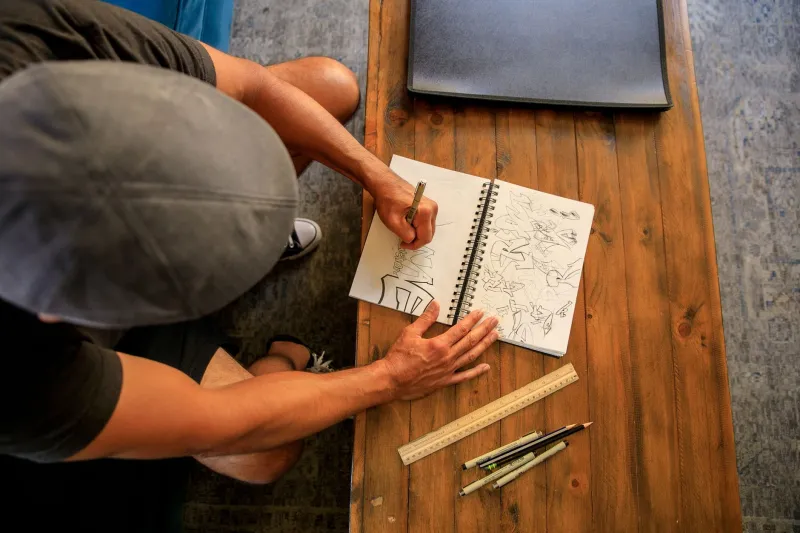
Somewhere in a walk-up apartment in Portland, Oregon, Delia Marsh is drawing a river. It doesn't correspond to any river on a real map. It runs through the middle of a journal spread, branching into tributaries labeled The Year I Lost Dad, The Summer We Drove to Taos, and The Month I Couldn't Leave the House. The river is blue-green and slightly wobbly, drawn with a Micron pen and colored with watercolor pencils she bought at a craft store on a whim three years ago.
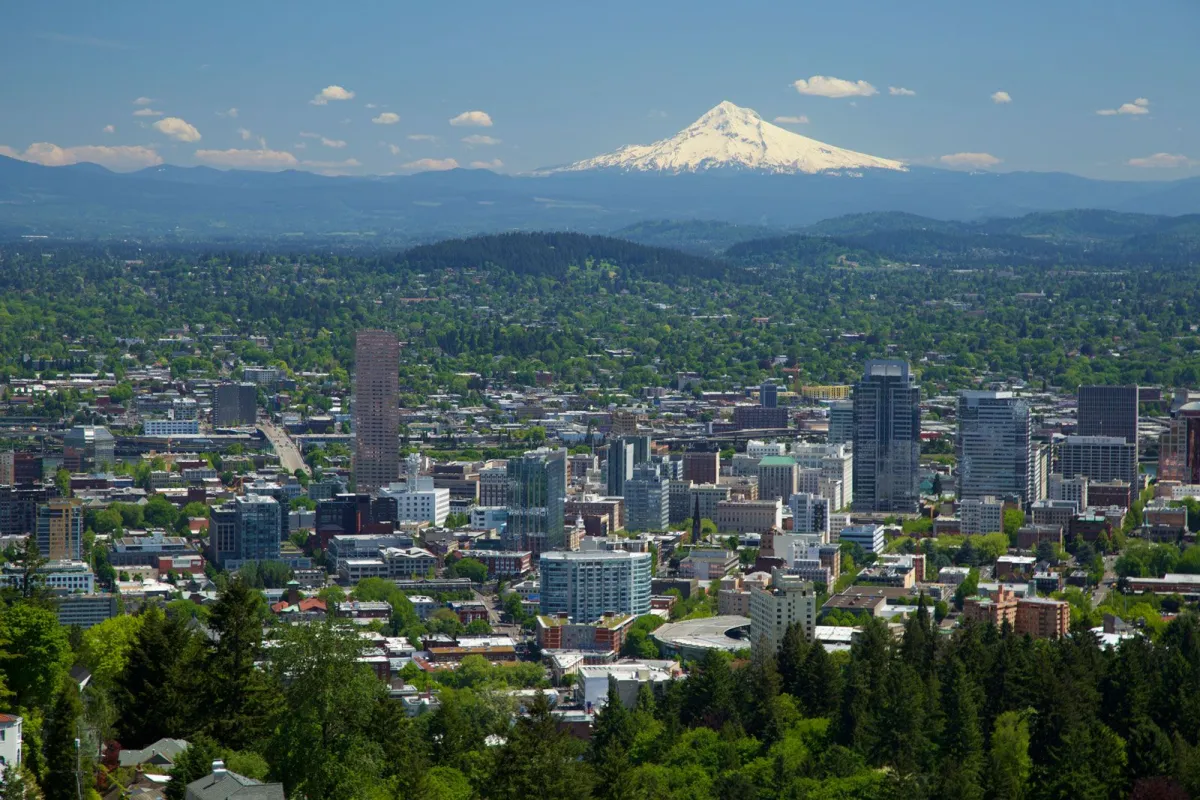 Photo: Portland, Oregon, via cdn.britannica.com
"I never thought of myself as an artist," she says. "I still don't, really. But I needed somewhere to put everything, and words alone weren't cutting it anymore."
Delia is part of a loosely connected, quietly growing community of people across the US who are turning their personal lives into illustrated journals — not just diaries with doodles, but genuine visual documents that blend memoir with amateur cartography, hand-lettered timelines, and original sketches. They're mapping grief and road trips, childhood neighborhoods and daily commutes. And they're doing it with ink, paper, and an unhurried kind of attention that feels almost countercultural right now.
The Map as a Mirror
The idea of mapping a life isn't entirely new. Artists and writers have long borrowed cartographic language to describe inner experience. But what's happening in sketchbooks and blank notebooks across America feels less like an art movement and more like a personal reckoning.
In Richmond, Virginia, Marcus Okafor started mapping his neighborhood after his mother passed away in 2021. He drew their street from memory — the angle of her porch, the corner store where she bought lottery tickets every Friday, the church two blocks down. "It wasn't accurate," he admits. "But accurate wasn't the point. The point was to remember it the way it felt, not the way Google Maps shows it."
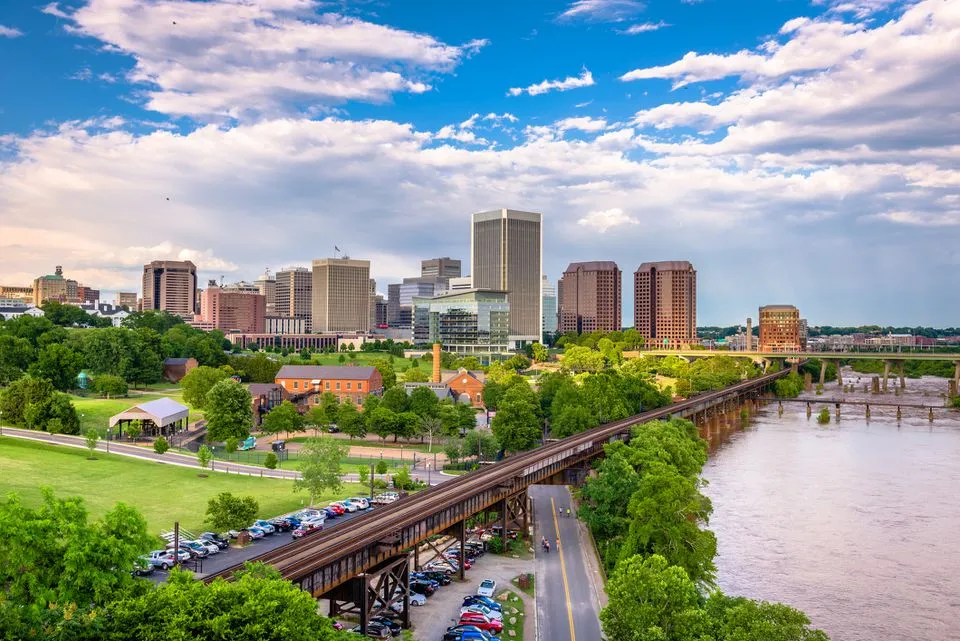 Photo: Richmond, Virginia, via www.tripsavvy.com
That distinction — felt geography versus documented geography — comes up again and again when you talk to people in this community. They're not trying to replicate reality. They're trying to interpret it.
In Albuquerque, a high school art teacher named Priya Sundaram uses illustrated journaling with her students as a way to process difficult emotions. "I started doing it myself first," she explains, spreading open a journal dense with hand-drawn floor plans of every apartment she's ever lived in, annotated with small notes: argued here, cried here, first good morning in months. "There's something about giving a place a shape on paper that makes your relationship to it make sense."
Pens, Paper, and the Politics of Slowing Down
For many practitioners, the practice is explicitly a response to screen fatigue — though they tend to describe it in more personal terms. Nobody's writing a manifesto. They're just choosing, quietly and repeatedly, to do something slow.
"My phone is always asking me to scroll faster, consume more, move on," says Jake Whitmore, a software engineer in Austin who started illustrated journaling during the pandemic and hasn't stopped. "A page in my journal asks me to stay." His journals are dense with illustrated timelines of his week — not productivity trackers, but visual records of small moments: a good cup of coffee rendered in careful cross-hatching, a rainy Tuesday afternoon mapped as a weather system moving across a hand-drawn Texas.
There's a loosely organized online presence for this community — hashtags, Discord servers, the occasional YouTube tutorial — but the culture is notably low-pressure. Nobody's selling a course. The aesthetic varies wildly, from tightly rendered architectural drawings to cheerfully chaotic collages. What unites people is the commitment to the physical act itself: hand to pen, pen to paper, thought to image.
Grief, Travel, and the Spaces Between
Illustrated journaling seems particularly well-suited to two emotional territories: grief and travel. Both involve navigating unfamiliar terrain, and both resist the clean resolution that language sometimes demands.
Naomi Chesterton, a hospice nurse in Minneapolis, began drawing maps of her patients' hometowns as they described them during their final weeks. "People want to talk about where they came from," she says softly. "And I found that if I drew it as they talked — even badly, even just rough shapes — it kept them talking. It honored the geography of their lives." She keeps those drawings in a separate journal, one she considers almost sacred.
For travelers, the illustrated journal offers something photography can't quite replicate: the duration of attention. Drawing a street corner in New Orleans or a diner in rural Montana takes time. You have to really look. "A photo takes a second," says Delia. "A drawing takes twenty minutes. And in those twenty minutes, you're just there." She pauses. "That's the whole thing, honestly. You're just there."
What Gets Kept
There's a question that hovers over all of this: what happens to these journals? Unlike a social media post, they don't have an audience built in. Some people share pages online; most don't. The journals accumulate on shelves, in boxes, in the backs of closets.
Marcus has seven journals now. He keeps them stacked on his nightstand. "My kids will find them someday," he says. "And they'll know exactly where we came from. Not just the facts of it — but the feeling. The texture. The way the street curved." He picks up a pen and makes a small mark on the corner of a page, almost reflexively. "You can't scroll past that."
Maybe that's the whole point. In an era when nearly every experience gets flattened into a feed, these hand-drawn maps and illustrated timelines insist on dimensionality. They're slow, imperfect, and irreplaceable — which is to say, they're exactly like the lives they're trying to hold.