Side A, Side B, All Heart: The People Handcrafting Mixtapes in a Streaming World
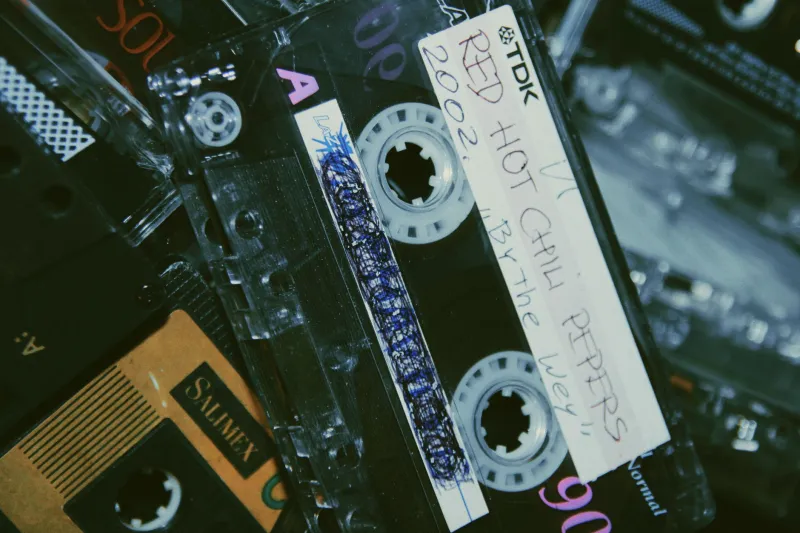
There's a shoebox under Maya Delgado's bed in Austin, Texas, that she hasn't opened in three years. Inside it, wrapped in a rubber band that's starting to crack, are eleven cassette tapes — each one labeled in someone else's handwriting. Her college boyfriend made most of them. Her best friend from high school made one. Her late grandmother, improbably, made the last.
 Photo: Austin, Texas, via a.cdn-hotels.com
"She found a blank tape at a garage sale and just... did it," Maya says, laughing softly. "It was all Frank Sinatra and one random Shania Twain song. No explanation. Just her handwriting on the label: For Maya. Play when you miss me."
She hasn't played it yet. She's not ready. But she knows exactly where it is.
That's the thing about a mixtape. It holds its ground.
The Algorithm Can't Love You Back
Spotify will generate you a playlist called "Chill Vibes" in about four seconds. Apple Music has already figured out you like sad indie folk on Sunday evenings. The technology is impressive, genuinely useful, and almost completely impersonal.
Which is exactly why a loose but passionate community of music lovers across the country has started doing something that feels almost radical: making mixtapes by hand.
Not digital playlists dressed up with a cute name. Actual cassette tapes, with physical labels, track listings written in pen, and liner notes — sometimes a single sentence, sometimes four pages — tucked inside the case like a tiny letter.
On Reddit's r/cassetteculture and r/lofi communities, threads about mixtape-making regularly pull hundreds of comments. Etsy shops selling blank tapes, vintage-style labels, and cassette cases with room for handwritten inserts are doing steady business. In cities like Portland, Nashville, Chicago, and Philadelphia, small "tape swap" events have started popping up — strangers trading curated cassettes the way people once traded zines.
"There's a hunger for something that took effort," says Jordan Ames, a graphic designer in Brooklyn who started making mixtapes for friends during the pandemic and now makes about two a month. "A playlist takes ten minutes. A mixtape takes an afternoon. That difference is the whole point."
The Architecture of a Good Tape
Ask any serious mixtape maker and they'll tell you: sequencing is everything.
It's not just about which songs you pick. It's about the order. The way one song bleeds into the next. The emotional arc across a side. Whether you open with something that grabs or something that eases. Whether you end on resolution or leave things open.
"I think about it like writing a short story," says Priya Nair, a librarian in Minneapolis who has made over sixty mixtapes in the last four years. "There's an introduction, a build, a turn somewhere in the middle, and then a landing. If I can't feel a shape to it, I start over."
Priya made her first tape for a friend going through a divorce — seventy minutes of music organized around the theme of becoming yourself again. She spent two weekends on it. The liner notes were three handwritten pages. Her friend still calls it one of the most meaningful things anyone has ever given her.
"A Spotify playlist would've been nice," Priya says. "But it wouldn't have been that."
Cassettes as Time Capsules
Part of what makes the physical mixtape so emotionally durable is its resistance to change. A Spotify playlist is a living document — songs get removed when licensing lapses, you can edit it on a whim, the whole thing can disappear. A cassette tape is fixed. It's a moment, sealed.
That quality makes it uniquely suited to certain kinds of stories.
Dave Kowalski, a high school music teacher in Cincinnati, has made memorial tapes for three people in his life who have died. Each one pulls together songs that meant something to that relationship — songs they heard together, songs the person loved, songs that say what he couldn't quite say out loud.
"I don't play them," he admits. "I make them and I put them somewhere safe. It's more about the making. About sitting with those songs and thinking about that person for an entire afternoon."
He pauses. "It's a weird kind of grief ritual, I guess. But it helps."
The Label Is Part of the Story
Walk into any craft store and you can find blank cassette label sheets. But the real collectors — the people who've turned mixtape-making into something close to an art form — tend to design their own.
Hand-lettered text. Tiny illustrations. Watercolor washes. Collaged images cut from old magazines. Some people use typewriters. Some use rubber stamps. The label, for these makers, is the cover of the book. It sets the tone before the listener ever hits play.
Jordan Ames photographs every tape he makes before he gives it away. His Instagram, which he keeps small and semi-private, reads like a gallery of miniature album art — each one different, each one somehow reflecting the person it was made for.
"The label is a promise," he says. "It tells you: someone thought about this. Someone thought about you."
What We're Really Making
Maybe the mixtape revival is about nostalgia. Maybe it's a reaction to the frictionless, endlessly customizable experience of streaming. Maybe it's just that some people really love cassette tapes and always have.
But spend any time talking to the people who make them, and a different explanation keeps surfacing: the mixtape is one of the few creative formats that is entirely about another person.
A painting is about the painter. A novel is about the writer. But a mixtape — a real one, made with care — is about the recipient. Every song choice, every sequence decision, every word in the liner notes is an act of attention. Of witnessing.
In a culture that often makes intimacy feel like a performance, there's something quietly subversive about spending a Saturday afternoon thinking deeply about what someone else needs to hear.
Maya Delgado still hasn't opened that shoebox. But she knows the day is coming. And when it does, she'll have eleven stories waiting — each one 45 minutes long, each one someone's handwriting on the label, each one proof that someone, at some point, thought she was worth the afternoon.
That's not nostalgia. That's just love, pressed into plastic.