The Footage Nobody Watched: How a New Generation of Filmmakers Is Turning Home Videos Into Art
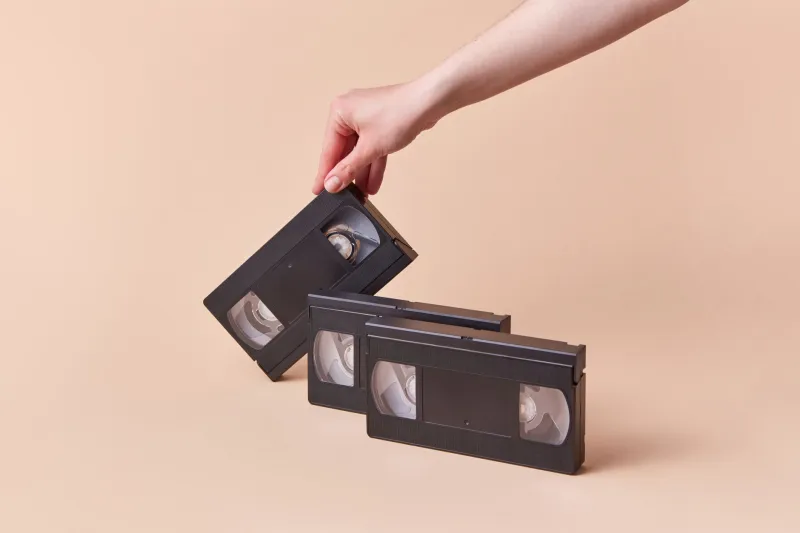
The tape sat in a shoebox in Elena Vasquez's garage for eleven years after her mother died. It was labeled, in faded marker, Christmas 1994 — and Elena couldn't bring herself to watch it, or throw it away, or do anything with it at all. It just lived in the box, next to a broken watch and a stack of birthday cards.
Then, two winters ago, she watched it.
"My mom was thirty-two in that footage," Elena said, her voice going quiet. "Younger than I am now. She was laughing at something my dad said off camera, and I'd completely forgotten she laughed like that."
What started as a private act of grief became something else entirely. Elena spent the next eight months cutting that tape — along with dozens of others — into a seventeen-minute short film she called Before the Camera Knew Us. It has since screened at four independent film festivals and made strangers cry in darkened rooms across the country.
She is not alone in what she's doing.
Mining the Mundane
There is a growing community of American artists and filmmakers — some trained, many not — who are treating home video archives like archaeological sites. They dig through VHS tapes, Super 8 reels, MiniDV cassettes, and forgotten hard drives full of .mov files, searching for the emotional DNA buried inside footage that was never meant to be seen by anyone outside the family.
What they find, again and again, is that the most powerful material hides in the moments nobody thought to stage.
A kid blowing out birthday candles, distracted by something just out of frame. A grandmother smoothing her dress before sitting down for Thanksgiving dinner, a gesture so automatic she doesn't know she's doing it. Two brothers roughhousing in a backyard until one of them starts actually crying and the camera awkwardly pans away.
These are the moments that make the films sing.
"Scripted drama has to work really hard to achieve what home video does accidentally," said Marcus Webb, a Brooklyn-based filmmaker whose documentary essay Static stitched together footage from fifteen different families — none of them his own — into a meditation on American domestic life in the 1980s and '90s. "There's no performance anxiety in home video. People are just being. And that's almost impossible to fake."
The Technical Alchemy
The craft involved in transforming raw home footage into art is more demanding than it might appear. These filmmakers aren't simply pressing play and calling it a documentary. They're making editorial decisions about rhythm, pacing, and emotional arc that rival any narrative film.
Some work with found footage they've sourced from estate sales, thrift stores, and online archives — tape collections that belonged to strangers whose families no longer wanted them. Others collaborate directly with families, sitting with grandparents and adult children to gather context and oral history that then shapes how the footage gets cut.
Audio is often the key. A filmmaker named Jodie Park, based in Portland, Oregon, builds her films around the sounds that survive on tape — the particular hiss of a VHS recording, the way voices flatten when they get too close to a cheap camcorder microphone, the background noise of a house that no longer exists. "Sound is the most time-traveling thing there is," she said. "You hear a specific fridge hum from 1989 and you are there."
 Photo: Portland, Oregon, via www.hotelvintage-portland.com
Universal Truths in Private Footage
What makes this work resonate beyond the families who lived it is the strange universality of the specific. A birthday party filmed in Akron in 1991 shouldn't make a twenty-three-year-old in Austin feel anything. But it does. It almost always does.
The reason, filmmakers in this space suggest, is that home video captures the texture of being alive in ways that polished media never quite manages. The awkward pauses. The genuine surprise. The moments when someone says the wrong thing and everyone laughs anyway. These aren't just personal memories — they're proof of something shared, some common frequency of human experience that runs underneath all of our different lives.
Elena's film about her mother has been described by reviewers as "a film about grief" and "a film about motherhood" and "a film about time." Elena herself calls it "a film about a woman I didn't know as well as I thought I did."
All of those descriptions are correct.
The Ethics of the Archive
The practice raises real questions, particularly when filmmakers work with footage that doesn't belong to them. Who owns a home video? What does it mean to screen someone's private Christmas morning at a film festival? Is it exploitation, or is it preservation?
Most of the artists working in this space think hard about these questions. Marcus Webb obtains written consent from families before using their footage and, when families can't be located, makes that ambiguity part of the work itself — a reminder that these are real people whose stories deserve care.
"There's a responsibility that comes with this material," he said. "You're not just editing footage. You're handling someone's memory. That's not nothing."
The Shoebox in All of Us
Somewhere in your house, or your parents' house, or a storage unit someone keeps paying for out of habit, there is almost certainly a shoebox like Elena's. A tape nobody's watched in a decade. A hard drive full of blurry phone videos from a family vacation. A reel of Super 8 film that would require a projector nobody owns anymore.
The filmmakers in this community would tell you: don't throw it away. Don't let it migrate to a cloud folder where it will never be seen. Watch it. And if you're brave enough, let someone help you find the story inside it.
"Every single piece of home footage is a film waiting to happen," Jodie Park said. "You just have to be willing to sit with it long enough to find out what it's trying to say."
Elena watched her mother laugh at something her father said off camera, and made a film about it, and strangers cried.
That's what footage no one thought mattered can do, when the right person decides to pay attention.