Sealed With Intention: Why Americans Are Falling Back in Love With the Handwritten Letter
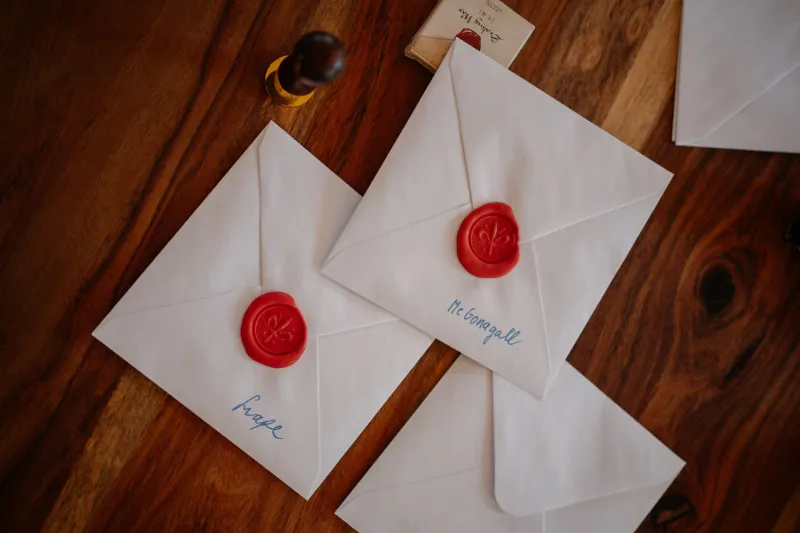
Somewhere in a pale yellow house in Asheville, North Carolina, Miriam Okafor is sitting at a writing desk that belonged to her grandmother. She uncaps a fountain pen, positions a sheet of cream-colored paper — the good stuff, cotton rag, 90-weight — and begins a letter to a woman she has never met in person. They've been corresponding for four years.
 Photo: Asheville, North Carolina, via s.yimg.com
"There's a ritual to it," Miriam says, glancing up from the page. "I make tea first. I don't check my phone. It's the one time in my day that feels completely mine."
Miriam isn't an anomaly. She's part of a growing, loosely organized community of Americans who have quietly turned away from the convenience of digital communication and toward something slower, heavier, and — they'll argue — far more meaningful. They collect stationery the way others collect vinyl. They debate the merits of nib sizes on Reddit forums. They drip wax seals onto envelopes like they're signing treaties. And they believe, with a conviction that borders on evangelical, that a handwritten letter is the last truly intimate form of storytelling we have left.
The Inbox That Never Pings
It would be easy to write this off as nostalgia — a twee reaction to digital overload, the postal equivalent of brewing kombucha or knitting your own socks. But the numbers suggest something more substantive is happening. The US Postal Service reported a notable uptick in first-class mail volume among consumers aged 18 to 35 between 2020 and 2024, a demographic that had been reliably abandoning physical mail for over a decade. Stationery retailers like Papier and smaller independent shops have seen double-digit growth in fountain pen accessories and wax seal kits. On Instagram, hashtags like #snailmail and #penpalcommunity collectively pull millions of posts.
Part of this is pandemic residue — people stuck at home, craving connection, rediscovering slower pleasures. But the practitioners themselves point to something that outlasted lockdown: the specific quality of attention that letter writing demands, and delivers.
"A text message is ambient," says Daniel Reyes, a graphic designer in Portland, Oregon, who has maintained six active pen pal relationships for the past two years. "You send it and you kind of forget it. A letter requires you to sit with a person in your mind for an hour. You have to think about who they actually are."
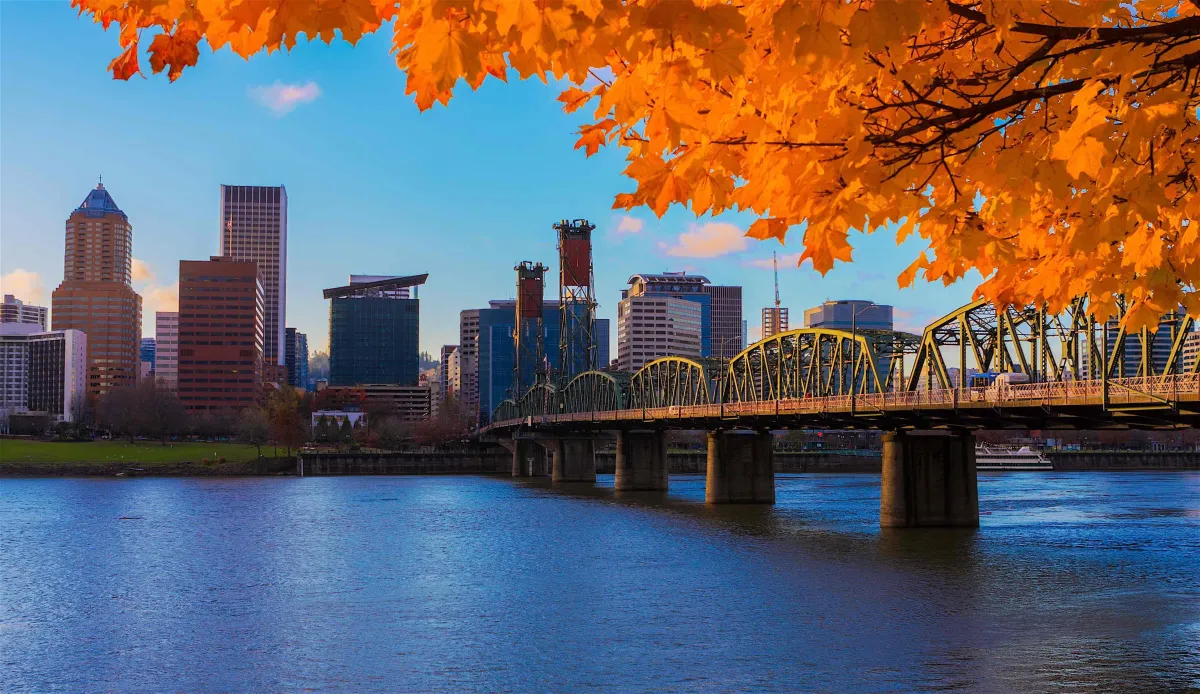 Photo: Portland, Oregon, via wallpapercave.com
Daniel met his oldest correspondent, a retired schoolteacher in rural Vermont named Carol, through a pen pal matching site called Slowly. Their exchange began as a curiosity — he wanted to practice a more intentional style of writing — and evolved into something he struggles to categorize. "She's not quite a friend, not quite a mentor. She's just Carol. And I know her better than people I've known for years, because we've never had small talk. Letters don't really do small talk."
Ink as Autobiography
For some writers, the letter itself has become an art form. Epistolary artists — a term that's gaining traction in creative communities — treat their correspondence as a kind of ongoing, collaborative narrative. The letter isn't just a vehicle for news or sentiment; it's a designed object, a curated experience, a story sent through the mail.
Take Josephine Marsh, a mixed-media artist based in Chicago who has been sending what she calls "narrative envelopes" since 2019. Each letter she sends includes hand-lettered text, small pressed flowers or torn magazine imagery, and occasionally a short piece of original fiction written specifically for the recipient. Her correspondents, scattered across twelve states and three countries, have started sending back their own creative responses — collaged envelopes, hand-drawn maps, tiny hand-bound booklets.
"It became this ongoing creative conversation," Josephine explains. "Some of these exchanges have directly influenced my studio work. One of my correspondents, a poet in New Mexico, sent me a line that I ended up using as the title of a whole series of paintings."
The idea that letters can launch — or meaningfully shape — creative careers isn't new. The correspondence between artists like Frida Kahlo and Diego Rivera, or writers like Flannery O'Connor and her many literary pen pals, has been mined for decades as evidence of how much creative thinking happens in letters that never makes it into finished work. What's interesting now is that ordinary people are discovering this dynamic for themselves, without academic framing or historical precedent to lean on. They're just writing, and finding that something opens up on the page that doesn't on a screen.
When Letters Do the Grief Work
Not every letter exchange is about creativity or connection-as-hobby. For many correspondents, the practice has served a more urgent purpose.
After her mother died in 2021, Tara Simmons, a nurse in Columbus, Ohio, found herself unable to talk about her grief — not with friends, not in therapy, not anywhere that required her to form words out loud in real time. A coworker suggested she try writing letters. Not to send, necessarily. Just to write.
She started writing to her mother. Then, on a whim, she posted in a grief support group asking if anyone wanted to exchange letters — real, physical letters — with someone else who was navigating loss. Twenty-three people responded.
"There's something about the physical act of writing that slows the grief down enough to look at it," Tara says. "And getting a letter back — holding it, feeling the weight of it — it's different from a comment on a post. Someone touched this paper. They sat down and thought about me."
She now coordinates an informal letter exchange network for grieving people, connecting strangers across the country who want to process loss through correspondence. She calls it, simply, Letters Back.
The Stationery as Statement
Walk into any serious letter writer's home and you'll find a stash. Tucked in drawers, stacked in wooden boxes, organized by weight and texture and occasion. The stationery itself is part of the practice — a declaration of values before a single word is written.
"Choosing paper is like choosing a frame for a painting," says Miriam, back in Asheville, holding up a sheet of pale sage green. "It tells the person something before they even read a word. It says: I thought about this. I prepared."
This tactile intentionality is, perhaps, what the letter writers are most trying to preserve — the evidence of effort, the proof of thought. In a communication landscape built around frictionlessness, the handwritten letter is friction on purpose. The slow delivery, the physical weight, the impermanence of ink that can smear and paper that can yellow: all of it says something that an algorithmically optimized message platform fundamentally cannot.
Miriam finishes her letter, folds it in thirds, slides it into an envelope. She presses a wax seal — dark green, stamped with a small moon — and holds it there for a moment while it sets.
"She'll get this in four days," she says. "And she'll know I was thinking about her for all four of them."