Threading Light: The Projectionists Who Won't Let 35mm Die
Threading Light: The Projectionists Who Won't Let 35mm Die
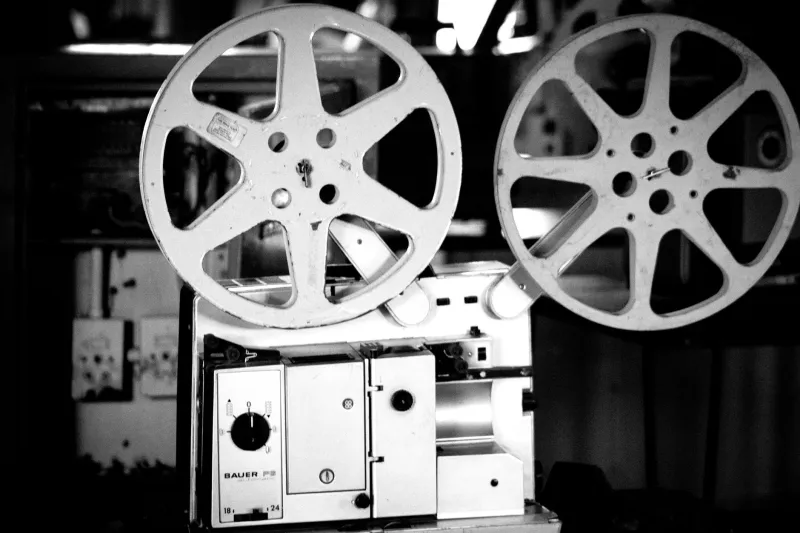
The booth smells like machine oil and something older — a faint chemical warmth that longtime projectionists describe as the smell of cinema itself. It's a small room, barely wide enough to turn around in, wedged above the back rows of the Majestic Theater in a mid-sized Ohio city that hasn't had a new multiplex in fifteen years. The projector here is a Simplex XL, a machine that's been running films since 1971. Tonight it's going to run Chinatown.
 Photo: Majestic Theater, via images5.alphacoders.com
Roy Dempsey, 61, lifts a reel the size of a steering wheel and begins threading the film with the practiced ease of someone who has done this ten thousand times. Loop here, gate there, tension just so. His hands move almost without looking. "You develop a feel for it," he says. "The film tells you when something's wrong. You can hear it, you can feel it through your fingertips."
Across the country, in projection booths from Seattle to Savannah, a dwindling number of people like Roy are keeping this ritual alive — threading celluloid, maintaining analog machines, and projecting 35mm film for audiences who come specifically for that experience. They are, in a very real sense, the last of something.
The Ritual of the Reel
Digital projection took over American movie theaters with startling speed. By 2013, most major chains had completed the transition. The economics were clear: no more film prints to ship, no more projectionists to pay, no more mechanical failures mid-screening. Digital was cheaper, more consistent, and endlessly scalable.
What it wasn't, many argue, was the same.
"Digital is like watching a very good photograph of a painting," says Carla Fuentes, who runs the Starlight, a single-screen independent theater in Tucson that has never converted. "Film is the painting." She's not being precious about it. She can walk you through the technical specifics — the grain structure of celluloid, the way light physically passes through each frame rather than being projected from a digital source, the subtle flicker that registers below conscious awareness but creates what cinematographers call the "film look." But she'll also tell you that the technical argument, while real, isn't really the point.
"The point is what happens in the room," she says.
What Happens in the Room
There is something that occurs in a theater showing 35mm film that is difficult to articulate and easy to dismiss. Audiences who've experienced both formats often describe the celluloid version as warmer, more present, more alive — though they struggle to say exactly why. Film scholars have theories. Projectionists have opinions. But the most compelling testimony comes from the people sitting in the seats.
At the Majestic, a Thursday night screening of Rear Window draws about forty people — a mix of retirees, film students from a nearby college, and a few couples who found the listing on a local arts calendar. Afterward, in the lobby, a woman named Greta who teaches high school history in a neighboring town tries to explain why she drives forty-five minutes each way for these screenings.
"It's the breathing," she says, after a pause. "The whole room breathes together. You laugh at the same second, you gasp at the same second. I don't get that watching something on my laptop, or even at the big AMC in Columbus." She shakes her head. "There's something about knowing that light is passing through the actual film, that this print has been in other theaters, that other people watched this exact copy — it makes it feel connected to something bigger."
Roy, who has overheard this from the doorway, nods slowly. "That's it," he says. "That's exactly it."
Custodians, Not Collectors
The people keeping 35mm alive resist the label of nostalgist, and it's worth taking that resistance seriously. Nostalgia implies a wish to return to the past for its own sake. What these projectionists and theater owners describe is something more purposeful: a conviction that something specific and irreplaceable is being lost, and a decision to stand in the way of that loss.
In Chicago, a collective called the Frame House runs monthly screenings out of a rented ballroom using a portable 35mm projector they've nicknamed "the beast." Co-founder Darius Wren, 34, got into projection after stumbling onto a film preservation workshop in his early twenties. "I'm not trying to turn back the clock," he says. "I'm trying to make sure the clock doesn't get thrown away entirely."
 Photo: Frame House, via i.pinimg.com
The Frame House has screened everything from classic Hollywood to international cinema to locally made short films shot on 16mm by Chicago filmmakers. They maintain a small library of prints, some donated by other theaters, some purchased from distributors at the end of a film's theatrical run. Each print, Darius explains, carries a history. Scratches, splice marks, the occasional cigarette burn from a careless projectionist decades ago — the physical evidence of every screening it's ever traveled through.
"A digital file doesn't have a body," he says simply. "A film print has a body."
The Future of the Booth
The math is not encouraging. Projectionists who know 35mm are aging out of the workforce, and few young people are learning the trade. Film prints are expensive to ship and maintain. The studios that still strike 35mm prints do so in small numbers, mostly for specialty releases and revival screenings.
And yet, there are signs of stubborn persistence. Quentin Tarantino's long-running advocacy for celluloid has introduced a generation of cinephiles to the format. Film schools are seeing renewed interest in analog production. A small but vocal community of younger projectionists — many of them self-taught through YouTube tutorials and mentorship from older booth operators — is emerging in cities like Brooklyn, Denver, and New Orleans.
Back in Ohio, Roy finishes threading the Simplex and steps back. In a few minutes he'll flip a switch, the carbon arc lamp will ignite, and Chinatown will unspool across the screen below him at twenty-four frames per second, exactly as it did when it first opened in 1974.
"People ask me why I still do this," he says, looking through the small porthole window at the empty seats slowly filling below. "And I always want to say — why wouldn't you?" He rests one hand lightly on the projector, the way you might rest a hand on the shoulder of an old friend. "This is how stories were meant to be told. In the dark, together, with light passing through something real."
He dims the house lights. The room goes quiet. The reel begins to turn.