Fold, Staple, Leave: The Quiet Revolution of Zines Made for Strangers
The laundromat on Lorain Avenue in Cleveland is the kind of place where time moves in thirty-five-minute cycles. You load the machine, find a plastic chair, and wait. Most people scroll their phones. A few read. And sometimes — if you look at the right plastic chair at the right moment — there's a small folded booklet sitting there, maybe eight pages, maybe just four, that wasn't there an hour ago.
It won't have a website on the back. It might not have a name on it at all. But it'll have something inside worth reading.
Something Left Behind on Purpose
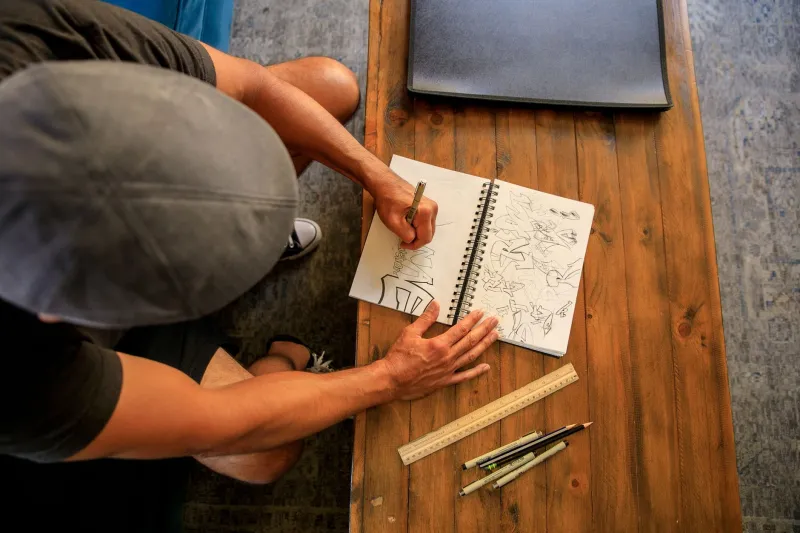
Marissa Cho has been a night-shift nurse at a Cleveland hospital for six years. She started making zines about grief during the pandemic — not to publish, not to sell, just to get the weight of it somewhere outside her own head. She printed them at a copy shop on her days off, folded them at her kitchen table, and left them in places where people sit and wait: laundromats, bus shelters, the waiting room of a free clinic on the west side.
"I didn't want a platform," she says. "I wanted someone to find it when they needed it."
Her zines don't announce themselves. The covers are simple — a hand-drawn image, a title like Still Here or What We Don't Say at Funerals. Inside, short essays, a few lines of something that's almost poetry, a list or two. The kind of writing that feels like someone sat down next to you and said the thing nobody usually says.
She doesn't know who picks them up. That's the point.
The Ghost Stories of New Orleans
Down in New Orleans, in a neighborhood where the streets smell like rain and old wood even when it hasn't rained in a week, Marcus Tureaud is illustrating things that may or may not have happened.
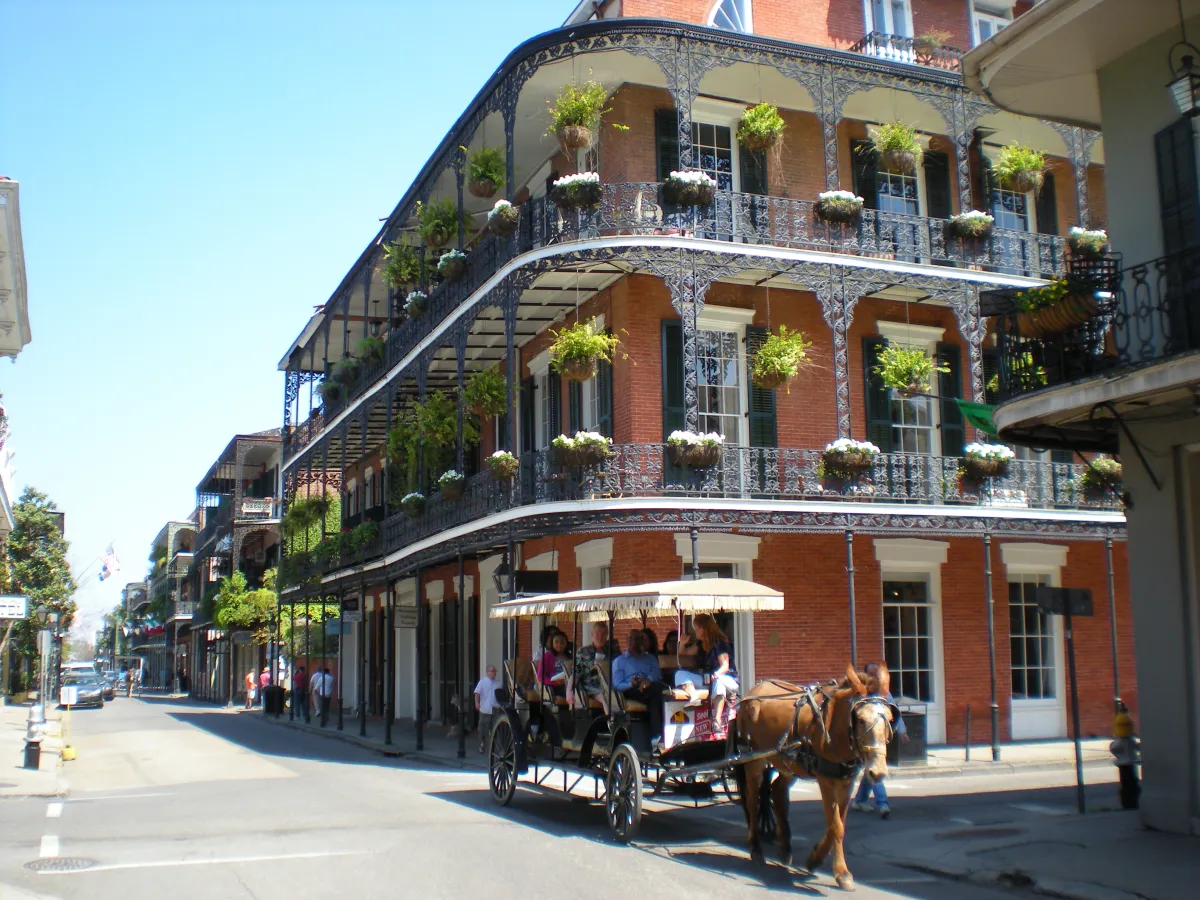 Photo: New Orleans, via upload.wikimedia.org
He dropped out of community college two years ago, not dramatically, just quietly stopped going. He started drawing the ghost stories he'd grown up hearing — the woman on Ursulines Avenue, the card player who never left the bar on Dauphine. He made them into zines. Twelve pages, black ink on cream paper, a print run of about thirty copies each time.
He leaves them at coffee shops, tucked into the newspaper rack. At the back table of a bar he likes. On the ledge of a bus stop on Magazine Street.
"New Orleans has all these stories and most of them never get written down," he says. "They just get told and then forgotten. I wanted to give them a physical thing."
He's made seven issues. He has no idea how many copies are still circulating. The thought delights him.
No Metrics, No Reach
What makes zine culture feel genuinely countercultural in 2024 isn't the DIY aesthetic or the photocopied look — it's the complete absence of feedback. There are no likes. No analytics dashboard telling you how many people read to the end. No comment section. You make the thing, you leave it somewhere, and then it belongs to whoever finds it.
For people who've grown up making things online — where every post exists in a constant state of being measured — that absence is almost disorienting at first, and then, for many, deeply freeing.
Sophie Garland is a graphic design student in Austin who started making zines last year after a semester spent obsessing over engagement metrics for a class project. Her first zine was twelve pages about the specific loneliness of group chats. She printed fifteen copies at the library and left them in coffee shops around campus.
"I kept waiting to feel anxious about it," she says. "Like, who's reading it, what are they thinking. And then I just... didn't feel that. It was already out of my hands."
She's on her fifth issue now. Her print runs have grown to about fifty. She still doesn't know who reads them.
The Tradition Behind the Staple
Zines have been around in various forms since at least the science fiction fan magazines of the 1930s, ran through punk and riot grrrl and every counterculture that needed a cheap way to say something without asking permission. What feels different now isn't the format — it's the motivation.
The people making and leaving zines today aren't necessarily trying to build a scene or establish an identity. Many of them are doing something closer to what Cho describes: putting something real into the world and trusting the right person to find it.
In Portland, a retired schoolteacher named Gerald Okafor makes zines about neighborhood history and leaves them in the branches of local library book exchanges. In Tucson, a group of friends makes a collaborative zine every month and distributes it at the farmers market without a table, just walking around and handing them to people who make eye contact.
None of these people are in contact with each other. There's no organization, no newsletter, no hashtag with significant traction. It's less a movement than a parallel instinct — something a lot of different people arrived at separately.
What It Means to Make for a Stranger
There's a particular kind of generosity in making something with no expectation of return. Not even the return of being known. Cho will probably never meet the person who picked up Still Here from that plastic chair in the Lorain Avenue laundromat. Tureaud will never know if his ghost story zines are sitting on someone's shelf or were read once on the bus and left behind for the next person.
But that uncertainty is, for most of them, the whole thing. The zine isn't a product and it isn't really a message — it's more like a gesture. A small proof that someone made something, thought it might matter to a stranger, and trusted the city to carry it where it needed to go.
"I think about the person who finds it more than I think about the person who made it," Cho says. "Which is me. But I think about them more."
Somewhere right now, in a laundromat or a bus shelter or the back corner of a coffee shop, something small and folded is sitting there waiting. Whether you pick it up is entirely up to you.