Everything That Ever Mattered: The Everyday Curators Building Museums Inside Their Own Homes
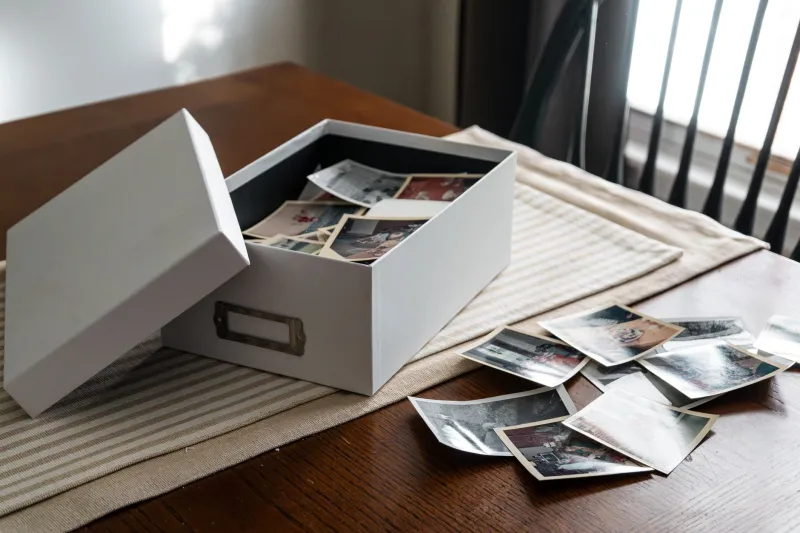
There's a room in Donna Marsh's house in Tulsa, Oklahoma, that her grandkids call "the memory room." The rest of the family just calls it Donna's room. It's a converted bedroom—nothing fancy, no velvet ropes—but every surface holds something deliberate. A pressed corsage from her junior prom. A stack of letters tied with kitchen twine. A photograph of her father standing in front of a car he no longer owns, in a city he no longer lives in, looking younger than she ever remembers him being.
"I didn't set out to make a museum," she says, laughing a little. "I just started putting things where I could see them instead of hiding them in a box."
What Donna built, without a grant or a curatorial degree, is something people all over the country are quietly assembling in spare rooms, on bedroom walls, and inside repurposed kitchen cabinets. Call it the personal archive. Call it the DIY museum. Call it what it actually is: a deeply human act of insisting that your life was worth something.
The Curator Is You Now
For most of recorded history, the job of deciding what mattered was outsourced. Museums decided. Libraries decided. Institutions with marble floors and donor plaques decided whose stories got preserved and whose got folded into a landfill. The rest of us were supposed to be grateful for the access.
That arrangement is coming undone. Not dramatically—not with protest signs or manifestos—but in the quiet, accumulative way that things actually change. People are reclaiming the act of curation as something personal and intimate, something that belongs to them.
Social media played a role in this, though not in the way platforms intended. All those years of posting, tagging, and cataloging our days online taught a generation of people to think about their lives as content worth organizing. But somewhere along the way, the feed stopped feeling like a home and started feeling like a billboard. So people brought the impulse home. Literally.
Sarah Okonkwo, a middle school art teacher in Columbus, Ohio, spent two years turning a hallway closet into what she calls her "cabinet of small things." Inside: a sand dollar from the last beach trip she took with her mom before she passed, a movie ticket stub from the first film she saw alone as an adult, a birthday card written in her daughter's early, crooked handwriting. Each item is labeled with a small card. Date. Place. Why it mattered.
"My husband thought I was losing it at first," she says. "Now he asks if he can add things too."
What Gets Kept, What Gets Left
The decisions are the whole thing, really. Every personal archive is ultimately an argument—a quiet, private argument about value. What rises to the level of preservation? What gets tossed?
Marco Delgado, a retired postal worker in San Antonio, keeps what he calls a "proof wall" in his garage. It's not sentimental in the traditional sense. No wedding photos, no baby shoes. Instead, it holds things that prove he was present for specific, ordinary moments: a receipt from the taqueria where he had his first meal after moving to Texas from Mexico City, a flyer from a neighborhood block party he helped organize in 1998, a handwritten note from a customer on his mail route who'd never met him but wanted to say thank you.
"I'm not famous," he says, simply. "Nobody's going to write a book about me. So I write it myself."
That sentiment—unprompted, but almost universally shared among the people building these archives—is the emotional engine underneath all of it. This isn't about ego. It's about the creeping, modern anxiety that our lives are too digital, too ephemeral, too easy to delete. A personal museum is a way of pushing back.
The Aesthetics of the Personal Archive
Not all of these collections live in dedicated rooms. Some are photo walls assembled with obsessive intentionality—not the random gallery walls of interior design blogs, but layered, evolving arrangements that function more like timelines than decoration. Others live in binders, in labeled Mason jars, in accordion folders kept under the bed.
What they share is a visible logic. A grammar of arrangement that communicates something about the person who built it, even to strangers. Walk into Donna's memory room and you understand, within about ninety seconds, that she is someone who loved deeply and lost a lot and decided to keep going anyway. The room doesn't say this in words. It says it in objects.
That's the thing about a well-curated personal archive: it does the work that language sometimes can't. It shows rather than tells. It holds the weight of a life in three dimensions.
The Archive as Inheritance
There's a practical dimension to all of this that people don't always talk about up front, but that surfaces quickly once you ask. Many of the folks building personal museums are thinking about what happens after.
Not in a morbid way, exactly. More in the way that anyone who has ever cleaned out a parent's house understands—that devastating, disorienting experience of sorting through a life with no guide, no context, no one to tell you which things mattered and which were just there.
Lena Park, a graphic designer in Portland, Oregon, started her archive after her grandmother died and the family spent three days trying to figure out what to keep from an apartment full of objects with no labels, no stories attached.
"We kept almost nothing," she says. "Because we didn't know what any of it meant. I never want someone to have to do that with my stuff."
Her archive is, among other things, an act of generosity. A gift to whoever comes after her. A translation of a life into something legible.
Making It Official Without Making It Stuffy
None of this requires a dedicated room or a label maker or a background in archival science, though some enthusiasts do go surprisingly deep on acid-free storage and proper humidity levels. What it requires is attention. The willingness to slow down long enough to ask: does this matter? And if so, why?
That question—asked sincerely, answered honestly—is the whole practice. The rest is just shelving.
Donna is adding to her memory room this spring. Her granddaughter, who is seven, brought her a drawing of their house and asked if it could go in "the museum." It's already on the wall, between the corsage and the photograph of her father.
"That's the thing," Donna says. "It's not finished. It's never finished. That's kind of the point."