Drawn in the Margins: The Forgotten Notebooks That Tell the Truth About Growing Up
Carol Dempsey almost threw the box away.
It was her last week in the classroom after 34 years teaching eighth-grade English in Dayton, Ohio, and she was doing what every retiring teacher does: sorting through the accumulated weight of a professional life lived mostly in 45-minute increments. Old lesson plans. Broken pencil holders. A coffee mug with a chip in it that she'd been meaning to replace since 2008.
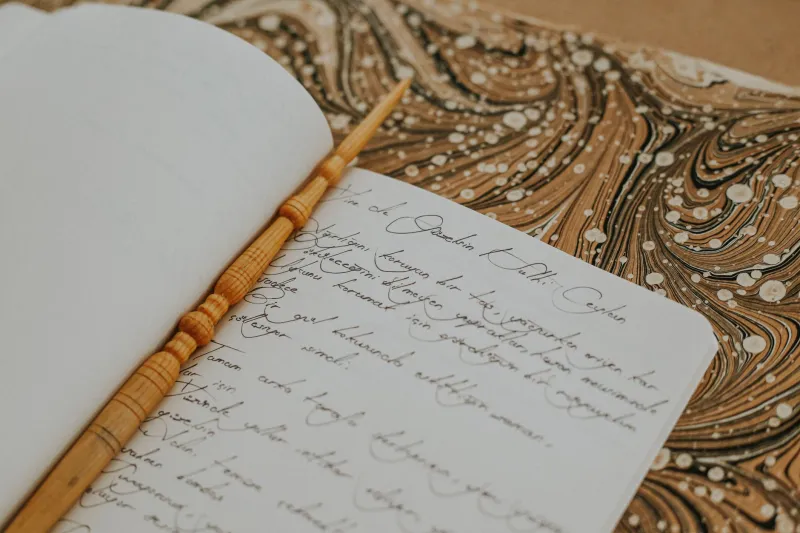
And then the box. Forty-something student notebooks she'd held onto over the decades for reasons she couldn't entirely explain—confiscated for one reason or another, or simply left behind at the end of the year by kids who didn't look back. She sat down on the floor of her classroom and started flipping through them.
She didn't get up for two hours.
"It wasn't the assignments," she says. "It was everything else. The stuff in the corners. The stuff squeezed between lines. That's where the real kids were."
The Space Between the Lines
The margins of a student notebook are a particular kind of freedom. They're technically part of the assignment—the paper was issued for schoolwork, the expectation is clear—but they're also ungoverned territory. Nobody grades the margins. Nobody reads them aloud. They're the one square inch of the school day that belongs entirely to the kid holding the pen.
And what kids do with that space is extraordinary.
Carol's box contained, among other things: a full comic strip about a substitute teacher who turns into a werewolf, rendered in blue ballpoint across the back pages of a vocabulary workbook. A running tally of how many times one student's teacher said the word "essentially" over the course of a semester (the final count was 412). A series of tiny, meticulous portraits of every kid at one lunch table, labeled with nicknames. And in a spiral notebook from 1997, tucked into the inside back cover in handwriting so small it required reading glasses to decipher: a letter addressed to "whoever finds this," written by a fourteen-year-old who said she felt invisible and wondered if anyone ever actually listened.
"That one I sat with for a long time," Carol says quietly. "She's probably in her early forties now. I hope she knows someone was listening."
What the Doodles Actually Are
Dr. Sunita Rao, an educational psychologist at the University of Michigan who studies adolescent expression, isn't surprised by what teachers like Carol are finding.
"The margin is a low-stakes creative space," she explains. "There's no evaluation attached to it, which means it's one of the few places in a school day where a kid can make something without fear. What you see in margins is often a much more honest portrait of a student's interior life than anything they'd put in an actual assignment."
The research on doodling and learning has evolved considerably over the past two decades. What was once dismissed as distraction is now understood to serve real cognitive functions—helping the brain stay engaged during passive listening, processing emotion, working through social dynamics. The kid drawing elaborate geometric patterns in the corner of their history notes isn't checked out. They might actually be more present than the kid staring straight ahead.
But beyond the neuroscience, there's something simpler going on. Kids in classrooms are living intensely compressed emotional lives. Everything matters enormously. Everything is happening for the first time. And sometimes the only place to put that is in the two-centimeter strip of white space beside the day's vocabulary words.
Teachers Who Kept What They Shouldn't Have
Carol isn't alone in her box-keeping. Talk to enough veteran teachers and you'll find a surprising number of them holding onto student artifacts they can't quite let go of.
Jamie Ostrowski taught high school art in rural Vermont for 28 years before retiring in 2021. He kept a dedicated folder of what he called "accidental masterpieces"—drawings students had done in the margins of other class notes, left behind in his room at the end of periods. "Some of these kids had no idea they were talented," he says. "They were just killing time. But the work was extraordinary. I kept it because I didn't want it to disappear."
In Memphis, Tennessee, retired middle school science teacher Denise Fuqua has been photographing margin artwork from old student notebooks she's found at thrift stores, estate sales, and school surplus auctions for the past six years. She posts them, anonymously, to an Instagram account with a small but loyal following. "People connect with them immediately," she says. "Because we all had a notebook like that. We all had margins."
Denise's account has surfaced some remarkable finds: a 1985 notebook from a middle schooler in Mississippi whose margin illustrations are so accomplished they look like professional editorial cartoons. A 1970s composition book from somewhere in the Midwest filled with what appears to be an original fantasy map, complete with legend and compass rose, drawn in pencil so light it barely survived the decades. A 1990s spiral notebook with a full-page portrait of Kurt Cobain rendered entirely in blue and red pen.
"These kids didn't sign their names," Denise says. "They weren't making art for anyone. They were just making it."
The Time Capsule You Didn't Mean to Leave
What makes these notebooks so affecting isn't just the quality of what's in them—it's the specificity. The margins are full of evidence: band names that date them precisely, slang that places them culturally, references to teachers and classmates and TV shows that conjure an entire world in a few words. They're inadvertent time capsules, more honest than any yearbook.
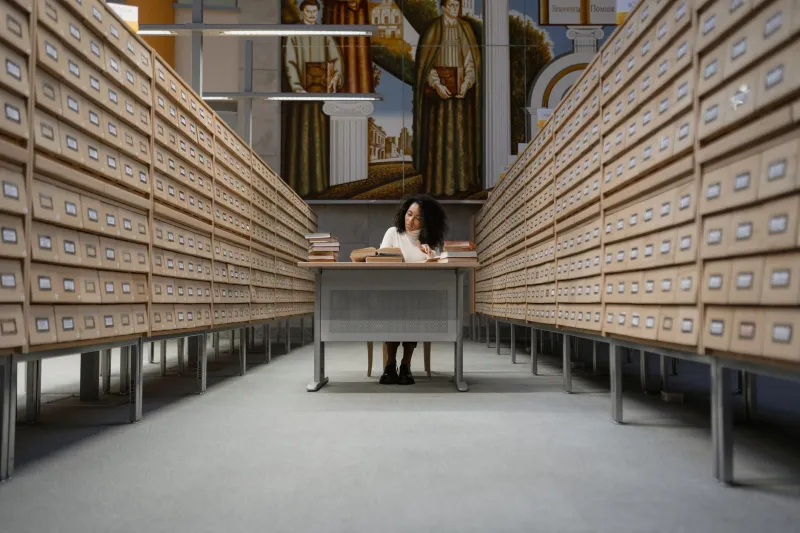
Carol Dempsey has started organizing her box with more intention. She's sorted the notebooks by decade, made notes about context where she has it, and reached out to a local historical society about whether they'd be interested in the collection. The response, she says, was warmer than she expected.
"Someone there told me that the most valuable primary sources are usually the ones people almost threw away," she says. "The official stuff gets preserved. The unofficial stuff disappears."
She still thinks about the girl from 1997. The one who wrote the letter to no one and everyone. Whoever she is now, she left something behind. It's still here, in a box in Carol's spare bedroom, waiting to be read by someone who will finally, fully listen.