After the Beep: The Families Keeping Grandma's Voicemail Alive
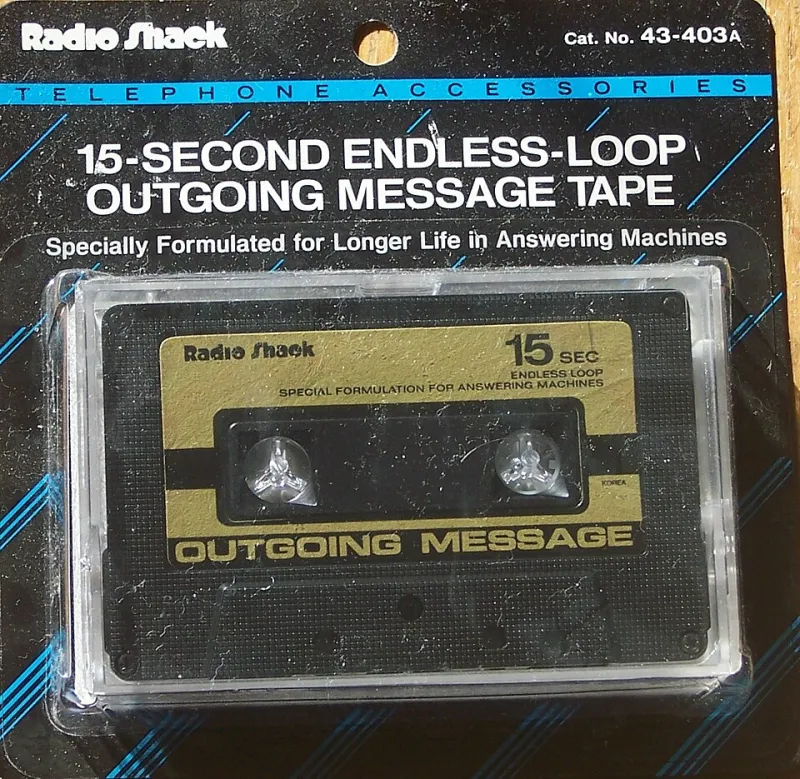
Photo: Wasted Time R, Public domain, via Wikimedia Commons
The cassette sat in a Tupperware container in Diane Okafor's basement for eleven years. Labeled in her late mother's handwriting — answering machine, do not toss — it held something no photo album could: her mother's voice, mid-sentence, telling a caller she wasn't home.
"I couldn't play it," Diane says. "I didn't own a machine anymore. And honestly, I was scared of what it would do to me if I did."
She's not alone. In basements, attics, and storage units across the country, millions of Americans are sitting on recordings they don't know how to hear — microcassettes from desktop answering machines, answering tapes from the big beige units of the 1980s, even old cell voicemails trapped in accounts they can't bear to close.
The Beep as a Boundary
There's something specific about a voicemail that a photograph can't touch. A photo shows you how someone looked. A voicemail tells you how they talked — the little laugh before they said your name, the way they always ended with "okay, love you, bye" before you could say it back.
"People tell me they just want to hear their dad say 'leave a message after the beep' one more time," says Marcus Delgado, who runs a small tape-transfer operation out of his garage in Dayton, Ohio. "The outgoing message. The greeting. That's the one that wrecks people. Because that was the voice strangers heard. That was how they introduced themselves to the world."
Marcus started the business after digitizing his own grandmother's tapes and posting about it in a Facebook group for estate cleanup crews. The response was overwhelming. Now he handles ten to fifteen transfers a week, mostly microcassettes that require a deck he had to hunt down on eBay.
Communities Built Around a Saved Message
Online, the practice has become its own subculture. Subreddits dedicated to audio preservation have threads with titles like "Found my mom's answering tape, can't play it, please help." Members trade advice on deck calibration, tape baking (yes, old tape can literally shed and needs low-heat treatment), and — more often — how to emotionally survive the playback.
"The number one rule we give people," says one longtime moderator, "is don't listen alone the first time. Not because of the tape. Because of you."
Some families go further. One woman in Portland has her late husband's voicemail greeting set as her own phone's voicemail, so when she's away, callers still hear him. A man in Georgia plays his father's saved message — a rambling reminder about a fishing trip — every year on his birthday.
From Cassette to Cloud
The technical process is unglamorous. A working deck, a playback head cleaned with isopropyl alcohol, a simple audio interface, and free software like Audacity. Twenty minutes of work for a file that will outlive every phone and laptop in the house.
But that's the point, Diane says. She made three copies of her mother's tape: one on her phone, one on a USB drive in a fireproof box, one uploaded to cloud storage shared with her brother in Arizona.
"My mother's voice is now in three states," she laughs. "She'd have hated that. She never left Ohio."
Last month, Diane played the recording for her daughter for the first time — a college freshman who never met her grandmother. The tape crackled, a dog barked somewhere in the background of 1997, and then a warm, slightly impatient voice: "Hi, you've reached the Okafors. We're probably just missing you."
Her daughter cried. Then she asked to hear it again.
That's the thing about these recordings. They were never meant to be artifacts. They were meant to be thrown away — the greeting was supposed to change, the tape was supposed to be reused. Someone forgot to erase them, and that forgetfulness became a gift.
Hold On to the Beep
If there's a tape in your house, a voicemail saved on an old phone, an account with a greeting you can't delete — the archivists all say the same thing. Copy it. Back it up. Don't wait for the deck to die or the tape to snap.
Because the beep doesn't last forever. But the voice after it can.