Save Before Closing: The Digital Archivists Preserving TikTok One Video at a Time
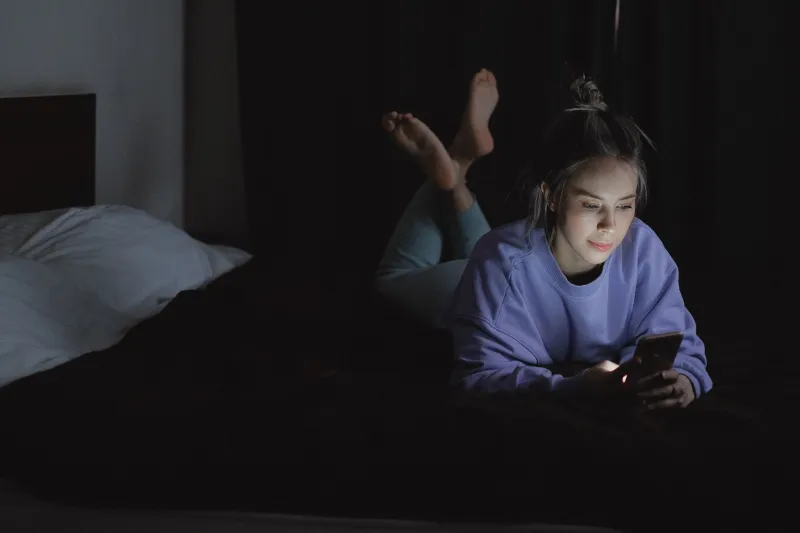
The night TikTok briefly went dark in January 2025—a shutdown that lasted only hours before being reversed—Jonah Frick was awake in his apartment in Minneapolis, watching his hard drive fill up.
He'd been preparing for weeks. He had scripts running, folders organized, a system he'd built over the previous two years to download and catalog videos from creators he followed, communities he cared about, corners of the internet he wasn't willing to lose. When the shutdown came, he was ready. When it ended, he kept going anyway.
"People acted like it was over and then it wasn't and everyone moved on," he says. "But the fragility was still there. It didn't go away just because the app came back."
Jonah is 26 years old. He works in IT. And in his spare time, he is building what he describes, without irony, as a library.
The Anxiety Is the Point
To understand why people like Jonah do what they do, you have to understand something about the internet that most of us know intellectually but rarely feel in our bones: it forgets constantly.
MySpace wiped its servers in 2019, taking 50 million songs and 12 years of social history with it. Vine, the six-second video platform that launched the careers of dozens of creators and produced a genuinely distinctive comedic vernacular, shut down in 2017. Geocities—the sprawling, chaotic neighborhood of early personal websites—was deleted by Yahoo in 2009. Each time, people said they hadn't realized how much they'd miss it until it was gone.
TikTok's particular vulnerability is legal and political rather than purely commercial, which gives it a different flavor of precariousness. It can be here today in a way that feels permanent and gone tomorrow in a way that feels sudden and total. That uncertainty, for a certain kind of person, produces a very specific impulse: get it while you can.
"I think of it the same way I think of analog photography," says Nia Chambers, a 31-year-old archivist by training and TikTok preservationist by vocation, based in Atlanta. "The medium is inherently impermanent. You can either accept that or you can do something about it."
Nia's collection currently spans roughly 14,000 videos, organized by creator, topic, date, and what she calls "cultural register"—a loose taxonomy she developed herself that categorizes videos by the community or subculture they represent. She has folders for Black TikTok, for the cottagecore community, for ASMR, for the small but fiercely devoted community of people who make content about competitive jigsaw puzzling. She has a dedicated section for what she calls "ephemeral trends"—the inside jokes and audio snippets and micro-memes that blew up for a week in 2021 and would now be nearly incomprehensible to anyone who wasn't there.
"That's the stuff that matters most to me," she says. "The things that were so specific to a moment that they barely exist anywhere as documentation. If I don't save them, they're just gone."
The Tools of the Trade
The mechanics of TikTok preservation are accessible enough that they've become a minor subculture of their own. Software tools like yt-dlp allow users to download videos in bulk. Python scripts circulate through Discord servers and GitHub repositories, allowing archivists to automate collection from specific accounts or hashtags. The Internet Archive's Wayback Machine crawls some TikTok content, though its coverage is inconsistent and often incomplete.
The harder challenge isn't downloading—it's organizing. A video without context is just a file. The meaning lives in the metadata: who made it, when, in response to what, as part of which conversation. Nia spends nearly as much time on documentation as she does on collection, writing notes about each creator's context, the cultural moment a video emerged from, the platform dynamics that shaped it.
"A video of someone doing a dance trend means almost nothing if you don't know what the trend was, where it came from, and who started it," she says. "And that context is often the first thing to disappear."
Jonah takes a different approach—less taxonomic, more personal. His archive is essentially a curated record of his own TikTok experience: the creators who meant something to him, the videos he returned to repeatedly, the communities that shaped how he thought about things. It's less like a library and more like a diary.
"I'm not trying to preserve all of TikTok," he says. "That's not possible. I'm trying to preserve my TikTok. The one I actually lived in."
What We're Really Saving
There's a question underneath all of this that the archivists themselves return to, sometimes uncomfortably: what exactly is worth keeping?
Not everything on TikTok is culturally significant. Most of it, by any reasonable measure, isn't. The vast majority of videos are ephemeral by design—made for a moment, consumed in a moment, forgotten in a moment. Insisting on their preservation can feel like a category error, like arguing that every grocery list deserves archival treatment.
But cultural historians have heard this argument before. Plenty of things that seemed trivial at the time turned out to be rich primary sources: dime novels, gossip columns, home movies, pop songs. The stuff people made casually, for themselves and their immediate communities, often ends up telling future researchers more about a period than the things everyone agreed were important.
"TikTok is where a lot of American youth culture lived for several years," says Dr. Priya Mehta, a media historian at Northwestern University. "The vernacular humor, the political expression, the relationship to body image and identity and community—it's all in there. If it disappears without documentation, we lose something real."
Nia thinks about this a lot. She's started reaching out to universities about whether any of them would be interested in her collection as a research resource. The responses have been cautious but curious.
For now, she keeps adding to the folders. New creators, new trends, new moments that feel, in the instant of their appearing, like they'll last forever.
She knows better than that. She's got the hard drives to prove it.