Ink Over Influence: How Road Trippers Are Falling Back in Love With the Written Page
Somewhere outside Amarillo, Texas, Maya Reyes pulled her beat-up Subaru into a gas station, filled the tank, and did something increasingly rare for a twenty-eight-year-old on a solo road trip: she put her phone in the glove compartment and picked up a pen.
 Photo: Amarillo, Texas, via assets.simpleviewinc.com
She wasn't posting. She wasn't filming. She was writing.
"I described the color of the sky for probably three full paragraphs," she laughed, recalling the moment. "Like, I actually looked at it long enough to need three paragraphs."
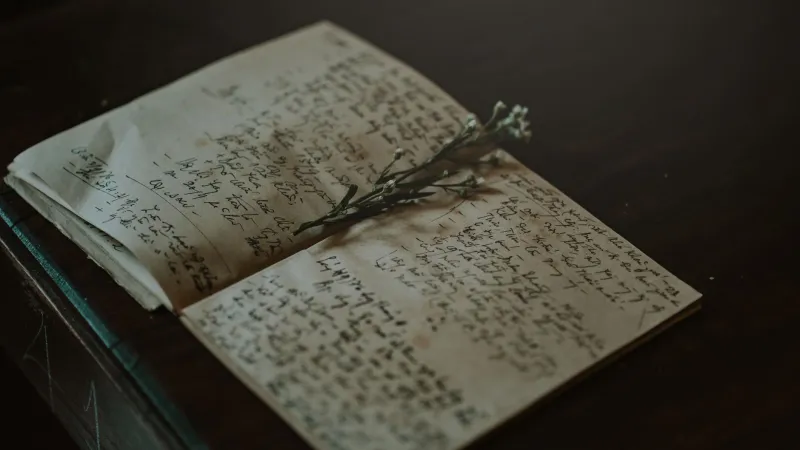
Maya is part of a loose but growing movement of American travelers who are quietly trading the algorithmic approval of Instagram for the tactile, unhurried ritual of keeping a handwritten road trip journal. No filters. No follower counts. Just a notebook, a working pen, and the open road.
The Scroll We Actually Mean
Here's the irony nobody talks about enough: we've all become champion scrollers and terrible storytellers. We capture everything and remember almost nothing. A road trip to the Pacific Coast Highway becomes two hundred photos that live in a cloud folder nobody opens, a handful of Stories that vanish after twenty-four hours, and a vague sense that something beautiful happened once.
 Photo: Pacific Coast Highway, via nwbus.com
The handwritten journal refuses that bargain.
When thirty-four-year-old Darnell Okafor drove from Chicago to New Orleans last spring, he brought three composition notebooks and filled all of them. He wrote about the truck driver he met at a diner outside Memphis who'd been on the road for nineteen years and could name every state by its specific smell. He wrote about the way the Mississippi Delta light hits flat farmland at four in the afternoon — the kind of gold that doesn't photograph right. He wrote about being homesick and exhilarated at the same time.
"None of that would've happened if I'd been trying to make content," Darnell said. "You can't be present and performing at the same time. You have to pick."
Why the Notebook Wins
There's a reason therapists have recommended journaling for decades, and it's the same reason road trippers are rediscovering it now: the act of writing forces you to synthesize experience rather than just document it. You can't write about a moment without deciding what it meant. That's not a small thing. That's the whole thing.
Social media, by contrast, rewards immediacy over reflection. The best Instagram post is the one you fire off while the light is still good. The algorithm doesn't care what you were thinking — it cares that you posted before the moment got cold. Speed is the currency, and depth is the cost.
A filled notebook doesn't work that way. It accumulates. It becomes an object with weight — literally and figuratively. Road tripper and amateur writer Sasha Burnett, who drove Route 66 last summer and documented every single mile in a leather-bound journal she bought in Flagstaff, described holding the finished book as "one of the most satisfying physical experiences of my adult life."
"I could feel how far I'd gone," she said. "Every page was a day. You can't feel that on a phone."
Slowing Down as a Radical Act
What's striking about the journalers who've embraced this practice isn't that they're anti-technology or nostalgic for some simpler era. Most of them are regular people who got tired of experiencing life through a viewfinder and wanted something back — some sense that a moment belonged to them and not to an audience.
Darnell put it plainly: "Social media turns you into a broadcaster. A journal turns you into a writer. And being a writer means you have to actually think about what happened."
That thinking, it turns out, is where the real story lives.
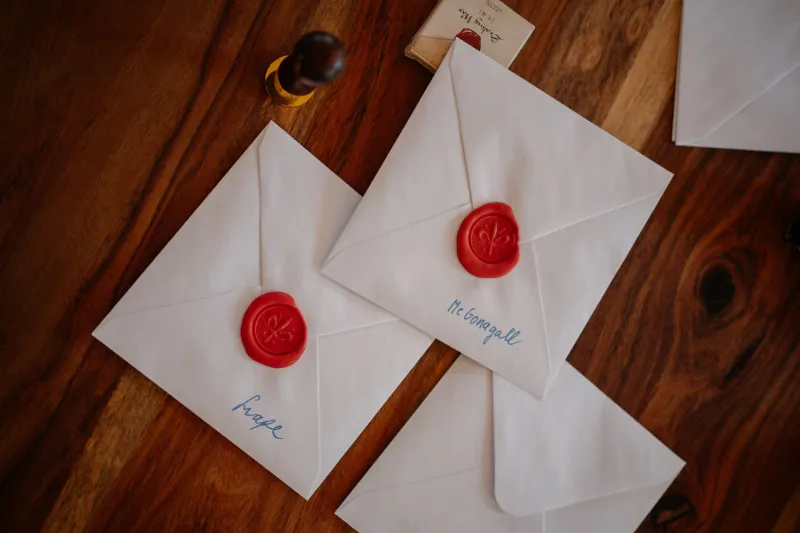
Maya's Amarillo sky — the one that needed three paragraphs — became the centerpiece of a piece she later shared with friends. Not posted. Shared. Printed out, mailed in envelopes with road-trip stickers on the outside. Her friends wrote back. An actual correspondence started. "It felt like something from another century," she admitted, "and I mean that as the highest possible compliment."
What to Put in the Pages
For anyone tempted to try it, the road trip journal has no rules — which is exactly the point. Some travelers sketch maps or tape in gas station receipts and diner napkins. Others write dialogue they overheard at rest stops or try to describe the specific sound a screen door makes in a small-town motel. Sasha kept a running list of every song that played on local radio stations across different states, annotated with what she was passing when she heard it.
The common thread is attention. The journal demands it. You can't write about something you weren't paying attention to, and that simple constraint changes how you move through the world.
"I started noticing things I would've scrolled past," Sasha said. "A hand-painted sign for a pie shop. An old man walking a tiny dog in the rain. Stuff that doesn't photograph well but is somehow the whole story."
The Story That Belongs to You
There's something quietly radical about creating a story that isn't optimized for anyone else. No hashtags. No engagement metrics. No wondering whether the caption is clever enough. A road trip journal is a story you tell yourself, and that might be the most honest kind of storytelling there is.
In a culture that has turned experience into content and content into currency, the notebook is a small act of refusal. It says: this happened, and it was enough, and it's mine.
Maya is already planning her next drive — a loop through the Southwest she's been putting off for years. She's already bought the journal. It's sitting on her kitchen table, blank and waiting, full of everything that hasn't happened yet.
She can't wait to write it down.