Other People's Pencils: The Readers Who Fall in Love With Books That Were Already Loved
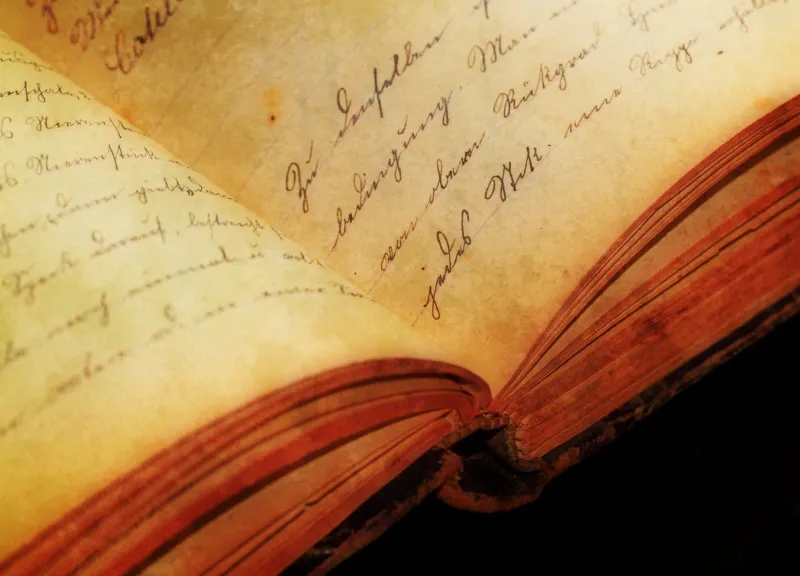
The book cost forty cents at a church rummage sale in Portland, Oregon. It was a paperback copy of Middlemarch, the spine cracked in three places, the pages gone the color of old cream. Nadia bought it without opening it, the way you sometimes do when something just feels right in your hand.
She didn't notice the pencil marks until she got home.
There were hundreds of them. Underlines, brackets, small stars in the margins. Question marks next to passages that must have confused someone. Exclamation points next to passages that clearly did not. And then, tucked near the back of the book, a full paragraph of handwriting in a cramped, leftward slant: This is the woman I have been waiting to read. I am 63 years old and I don't know why it took me this long.
Nadia, who is thirty-one, read that note four times. Then she started crying a little, in the good way.
"I felt like I'd been handed a letter," she says. "Not addressed to me, but somehow still meant for me."
The Collector's Eye for the Marked-Up Copy
There is a specific kind of used-book hunter who flinches at the word "pristine." For them, the ideal find is the opposite: a book that has been used, in the fullest sense. Underlines that cut deep enough to ghost through two pages. Marginal notes that argue with the author. Dates written inside the front cover — not just a name, but a year, sometimes a place. Cleveland, 1974. Birthday gift from D.
These collectors operate at estate sales, library discard bins, Goodwill shelves, and the deeper corners of used bookstores. They're not necessarily looking for monetary value. What they're hunting is evidence of a reading life — proof that someone, somewhere, sat with this exact object and felt something worth marking down.
Marco, a high school history teacher in Austin, Texas, has been collecting annotated books for over a decade. His shelves are organized not by author or genre but by what he calls "annotation density." Light pencil underlining on one end. Full-margin conversation on the other.
"The heavily marked ones are the ones that mattered to somebody," he says, pulling a copy of James Baldwin's The Fire Next Time from the high-density section. The margins are full. Someone has written "YES" in capital letters next to at least a dozen passages. "I don't know who this person was. But I know they were angry and awake and paying attention. Reading their notes makes me read the book differently."
What the Marks Actually Tell You
Marginalia is a form of autobiography that most people never intend to write. The books we mark reveal what confused us, what moved us, what we disagreed with, what we wanted to remember. They reveal our preoccupations and our blind spots. A reader who underlines every sentence about mothers is telling you something. So is a reader who writes "wrong" next to every political argument and never explains why.
For collectors like Marco and Nadia, the pleasure is partly detective work. You piece together a reader from the fragments they left behind. You notice patterns. You form a picture — imprecise, speculative, but strangely intimate.
Nadia has a shelf she calls her "pen pals" — books where the previous reader's voice was so distinct, so consistent across a whole volume, that she feels she knows them. A woman who read a copy of Their Eyes Were Watching God in what appears to be the early 1980s and wrote "she sounds like Aunt Cora" next to a description of Janie's laugh. A man who worked through a copy of The Old Man and the Sea with such mounting frustration that by the final pages he'd simply written "just catch the fish" in the margin.
"I think about them," Nadia says, without embarrassment. "I wonder if they're still alive. I wonder if they remember this book."
The Ethics of Reading Someone Else's Thoughts
There's a question that occasionally surfaces in conversations about marginalia collecting: is it strange? Is it an intrusion to read what someone wrote in the privacy of their own reading?
Most collectors don't think so — and their reasoning tends to be generous. Once a book enters the secondhand stream, its marginalia becomes part of its public life. The notes weren't destroyed or hidden. They traveled. They ended up in a bin somewhere, waiting.
"If you didn't want someone to read your notes, you'd use a separate journal," says Cara, a bookseller in Philadelphia who specializes in annotated editions and runs a small newsletter cataloging her more remarkable finds. "Writing in a book is a way of leaving yourself inside it. I think most readers who do it know, on some level, that the book might keep going after them."
Cara recently acquired a copy of To Kill a Mockingbird that had passed through at least four identifiable readers — she could tell by the different handwriting styles and ink colors. Each had marked different passages. Each had noticed different things. The book had become, over decades, a kind of slow-motion group read between strangers.
She listed it for sale but then didn't sell it. It's on a shelf behind her register now. She brings it out sometimes to show people.
"That's the whole history of reading right there," she says. "One book, four lives, all these marks. That's not clutter. That's the point."
The Mark You Leave Behind
Some of the collectors, after years of reading other people's marginalia, have started marking their own books differently — more deliberately, more generously. They write notes that aren't just for themselves. They imagine a stranger finding this book in thirty years.
Nadia has started signing her notes with just her first name and the year. Not her last name, not her address — just enough to be a person, not a ghost.
"I want whoever finds it to know I was there," she says. "I want them to feel what I felt when I found that woman's note in Middlemarch. Like someone reached across time and said, 'Hey. Me too.'"
That's the whole scroll, really. Page after page of people saying: I was here. This mattered. Pass it on.